Tashreeb Dijaj
Chicken and chickpea broth ladled over prepared Iraqi flatbread.
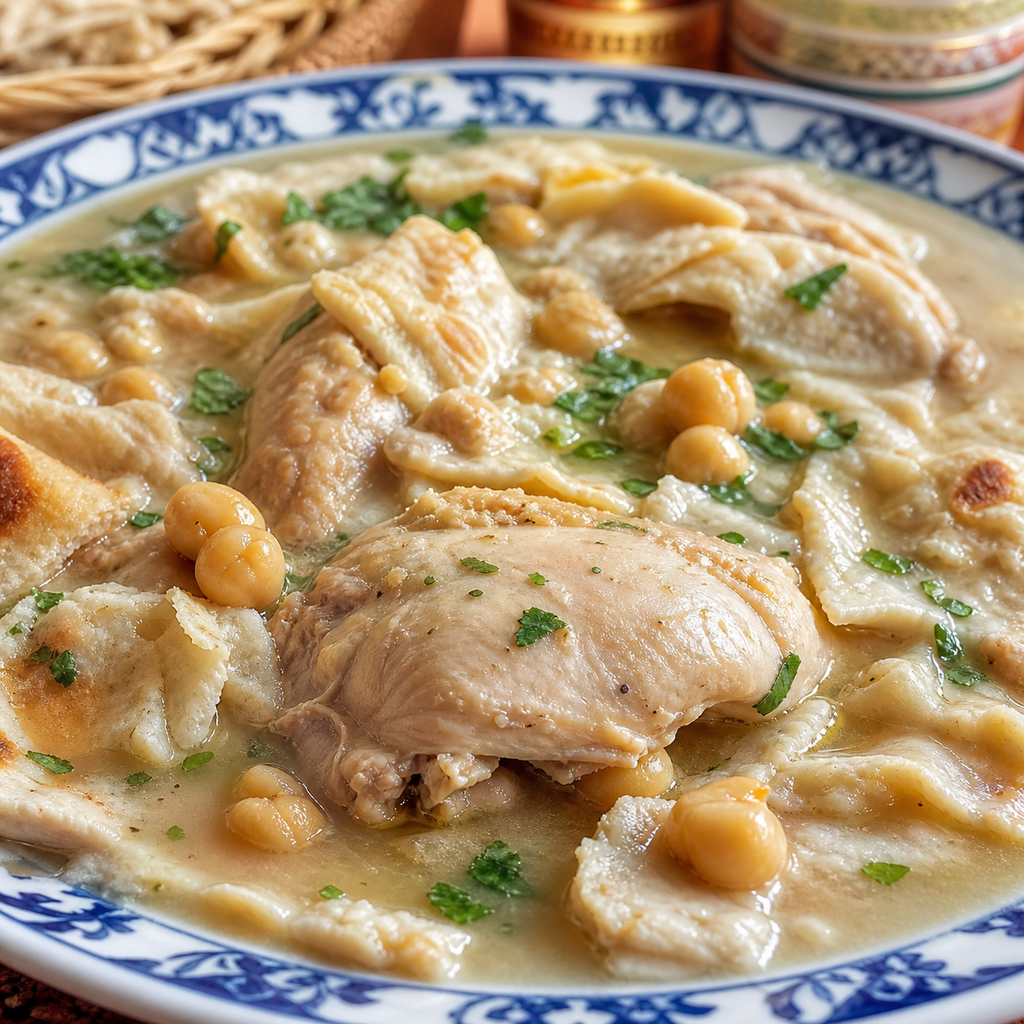
Preparation: 15 min · Cooking: 1 hr · Total: 1 hr 15 min · 2 servings
Ingredients
- 400 g Raw bone-in chicken drumsticks OR thighs
- Prepared ready-to-eat Iraqi flatbreads, consistent size — 2
- Whole dried black lime, pierced — 1
- 120 ml Cooked chickpeas, drained; measure AFTER cooking
- Small onion, chopped — 0.5
- 0.5 tsp Ground turmeric
- 720 ml Initial hot water for broth
- 1 tbsp Ghee
- Salt, to taste
- Additional boiling water ONLY if needed; measure additions (optional)
Instructions
Measure the base ingredients and keep raw meat chilled away from ready-to-eat bread.
Measure the base ingredients and keep raw meat chilled away from ready-to-eat bread. Use cooked drained chickpeas, not dry raw pulses.
Heat the 1 tbsp base ghee in a deep pot over medium-high heat.
Heat the 1 tbsp base ghee in a deep pot over medium-high heat. Brown the meat and chopped onion, checking from 6 minutes without scorching.
First check: 360 seconds
Stir in turmeric and pierced black lime over medium heat from 1 minute until fragrant.
Stir in turmeric and pierced black lime over medium heat from 1 minute until fragrant. Do not wash raw poultry or reuse raw-meat utensils for serving.
First check: 60 seconds
Pour in the initial 720 ml hot water carefully.
Pour in the initial 720 ml hot water carefully. Bring the broth to a boil over medium-high heat.
Skim the surface foam.
Skim the surface foam. Cover with a normal fitted lid and reduce to a gentle simmer.
Simmer from about 35 minutes until the chicken is cooked through.
Simmer from about 35 minutes until the chicken is cooked through. Check 75°C (167°F) in the thickest meat away from bone, not skin colour alone.
First check: 2100 seconds
If the broth becomes too low during simmering, add only measured boiling-water top-ups.
If the broth becomes too low during simmering, add only measured boiling-water top-ups. Starting water is not a promised final broth volume. The initial broth-water allowance is 720 ml.
Add the cooked chickpeas and salt during the final 10 minutes of gentle simmering.
Add the cooked chickpeas and salt during the final 10 minutes of gentle simmering. Ensure meat and chickpeas are hot throughout before assembly.
First check: 600 seconds
Remove the whole lime and loose bones with clean tools.
Remove the whole lime and loose bones with clean tools. Keep any remaining bones visible when serving bone-in pieces.
Tear the prepared flatbreads into a shallow serving dish just before eating.
Tear the prepared flatbreads into a shallow serving dish just before eating. Count 2 similar breads for base, 1 for half and 8 for fourfold.
Ladle hot broth gradually over the bread until as soft as desired.
Ladle hot broth gradually over the bread until as soft as desired. Reserve excess broth rather than forcing all of it into the bread.
Arrange the cooked meat and chickpeas over the softened bread.
Arrange the cooked meat and chickpeas over the softened bread. Serve promptly; store unassembled stew separately where possible.
Tips
- Cup = 240 ml; tbsp = 15 ml; tsp = 5 ml. Ingredients scale exactly; instruction amounts describe the base 2 servings. Use the same method at half and fourfold scale, with suitable vessels and manageable batches. Times are first checks, not doneness guarantees.
Common mistakes
- Do not restore old scaffold ingredients or treat conditional additions and recovered broth as extra fixed consumed yield. Keep raw foods separate from ready-to-eat ingredients.
Substitutions
- Only stated alternatives are included. Check product ingredients and allergens; use pasteurized dairy.
Storage
Cool promptly in shallow portions, ideally refrigerating within 1 hour at 4°C or colder. Use within 24 hours. This selected household limit is not a validated shelf-life study. Keep stew separate from bread where possible; unassembled non-rice stew may be refrigerated for 2 days.
Reheating
Reheat only the portion needed, at most once, to 74°C throughout. Rice must have been chilled promptly and used within 24 hours; reheating does not rescue mishandled food.
About this recipe
Tashreeb Dijaj is presented as the owner's Iraqi household version. Historical exclusivity, ancient origins and health benefits are not independently authenticated.
Editorial approval does not establish independent kitchen testing. Check allergens and follow safe food handling.