Tahdig
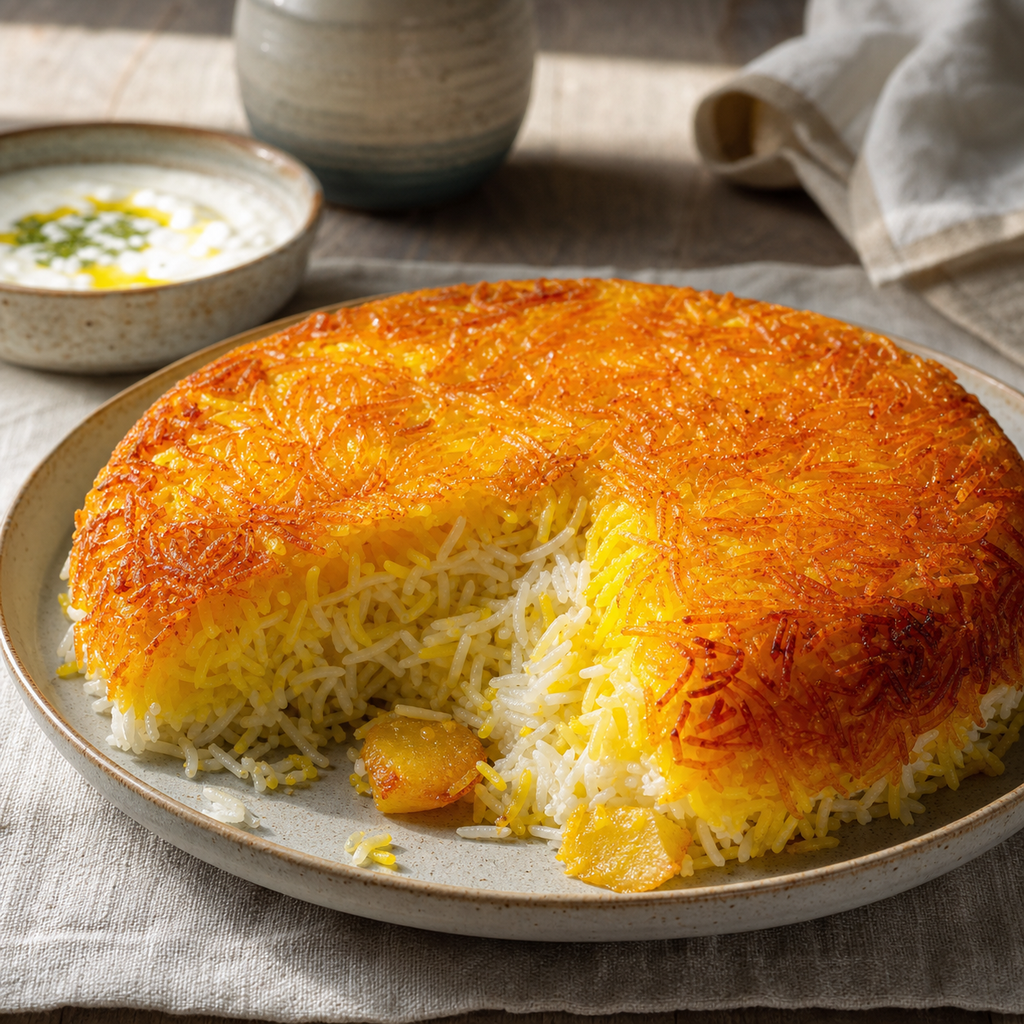
Persian steamed rice with a crisp saffron, yogurt and potato crust.
Preparation: 25 min · Cooking: 40 min · Total: 1 hr 10 min · 4 servings
Ingredients
- 400 g basmati rice — Rinsed until the water is nearly clear.
- 120 g plain full-fat yogurt — Dairy allergen.
- 0.5 tsp saffron threads — Bloomed in 2 tbsp hot water.
- 30 g butter — Melted and divided; dairy allergen.
- 2 medium floury potatoes — Peeled and sliced into 5 mm rounds.
- 45 ml neutral cooking oil — Such as rapeseed or sunflower oil.
- 2 l water — For soaking and parboiling.
- 20 g fine salt — For the parboiling water.
Instructions
Rinse the rice and prepare the saffron
Rinse the basmati rice in several changes of cool water until the water is almost clear, then soak it in fresh cool water for 20 minutes. Grind the saffron between clean fingers or in a small mortar, stir it into 2 tablespoons hot water, and leave it to bloom for 10 minutes. Peel the potatoes and keep them whole in cold water until slicing so they do not darken.
Parboil and drain the rice
Bring 2 litres water and the salt to a rolling boil in a large pot. Drain the soaked rice, add it to the boiling water, and cook uncovered for 5–7 minutes, stirring once or twice. Test a grain: the outside should be tender but the centre should still feel firm and chalky. Drain immediately in a colander and rinse briefly with lukewarm water to stop the cooking; let it drain well.
Prepare the potatoes and saffron-yogurt rice
Mix the yogurt with the bloomed saffron and about one quarter of the drained rice. Slice the potatoes evenly into 5 mm rounds and pat them completely dry. Melt the butter. Have the plain rice, saffron-yogurt rice, potatoes, oil and butter beside the stove before heating the pot.
Build the layers and steam the tahdig
Add the oil and half the melted butter to a 24 cm nonstick pot and warm over medium heat. Arrange the dry potato slices in one snug layer. Spread the saffron-yogurt rice evenly over them, then mound the remaining plain rice loosely on top without pressing. Drizzle over the remaining butter. Wrap the lid in a clean tea towel, tying the corners securely above the lid and away from the flame. Cover; cook over medium heat for 5 minutes until steady steam forms, then reduce to the lowest heat and start the retained 28-minute timer. Do not lift the lid during steaming.
Steam tahdig over low heat: 1680 seconds
Rest and release the crust
At the end of the timer, remove the pot from the heat and leave it covered for 5 minutes. Remove the lid away from your face because trapped steam can burn. Run a thin silicone spatula around the edge without scraping the crust. Set a heatproof serving platter, slightly wider than the pot, ready for inversion.
Check the rice and crust
Taste a grain from the top: it should be fully tender and separate, with no hard centre. Gently lift one edge with the silicone spatula; the potato and saffron-rice base should be deep golden, crisp and release as one crust. If it is pale or sticks wetly, cover and cook on the lowest heat for 3–5 minutes more, checking frequently so it does not burn.
Rice grains are tender and separate with no hard centre; the potato and saffron-rice base is deep golden, crisp and releases as one crust.
Invert, serve and store safely
Using dry oven gloves, place the platter face-down over the pot, hold pot and platter firmly together, and invert them in one confident motion away from other people. Lift off the hot pot carefully and serve the crisp crust with the fluffy rice. Refrigerate leftovers in shallow covered containers within 2 hours and use within 1 day. Reheat once in a 180°C oven until every part reaches 74°C; do not leave cooked rice at room temperature.
Tips
- A heavy nonstick pot and the lowest steady heat help the crust brown evenly without burning.
- Keep the rice loose when layering so steam can move through it.
Common mistakes
- Overcooking the rice before draining makes the final grains soft and prevents a distinct crust.
- Wet potato slices spit in hot fat and steam instead of crisping; pat them completely dry.
- Lifting the lid during the 28-minute steam releases the moisture needed to finish the rice.
Substitutions
- For a rice-only tahdig, omit the potato layer and spread the saffron-yogurt rice directly over the oiled pot; keep the same low-heat doneness checks.
Storage
Refrigerate in shallow covered containers within 2 hours and use within 1 day.
Reheating
Reheat once in a 180°C oven until every part reaches 74°C; do not leave cooked rice at room temperature.
About this recipe
Tahdig means “bottom of the pot” in Persian. The prized crisp layer is served alongside steamed rice at Iranian meals; it may be made from rice, bread or potato.
Editorial approval does not establish independent kitchen testing. Check allergens and follow safe food handling.