Omani Lamb Shuwa — Home Oven
A measured banana-leaf-wrapped home-oven adaptation, not an underground-pit process.
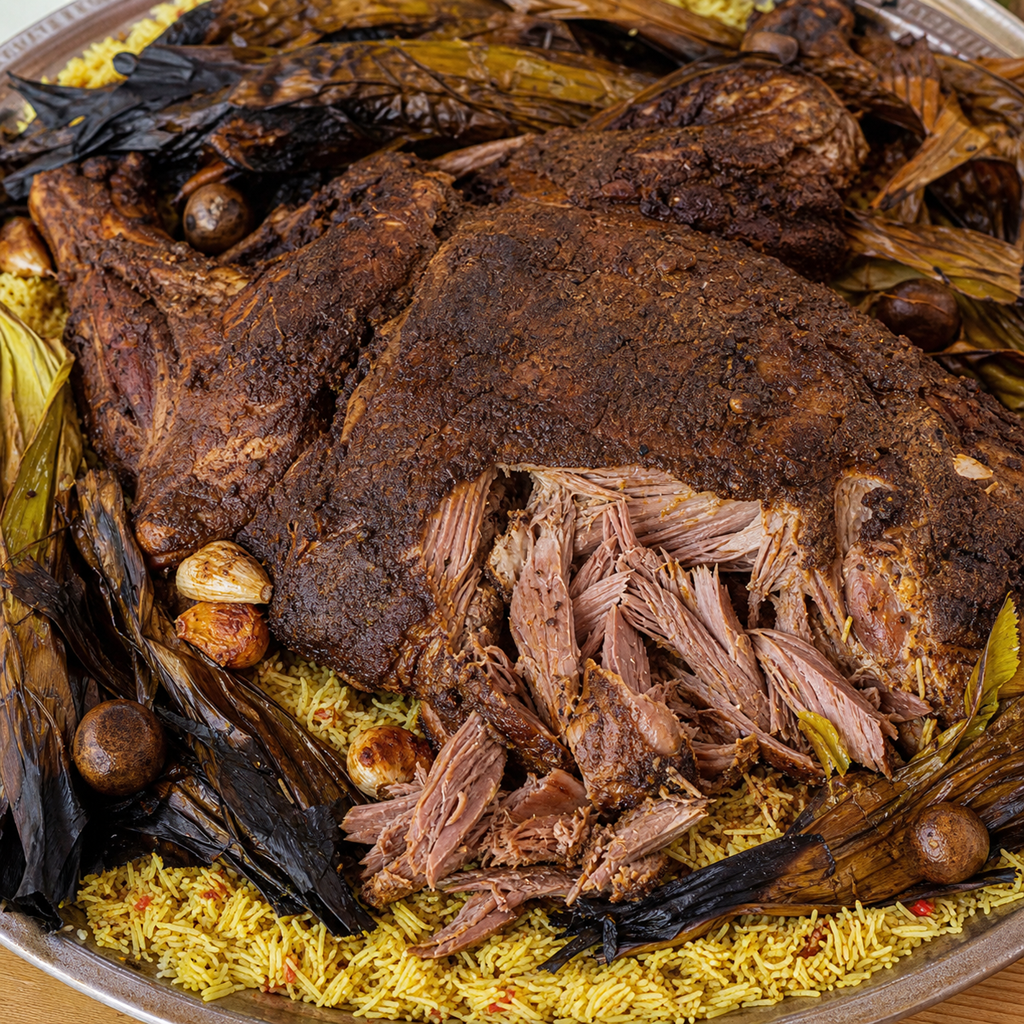
Preparation: 15 min · Cooking: 3 hr · Total: 5 hr 30 min · 2 servings
Ingredients
- 500 g RAW bone-in lamb shoulder, 4 cm pieces
- 4 cloves Garlic cloves, peeled and crushed
- Food-grade banana leaves suitable to enclose the meat — 2
- 50 ml Food-grade 5% distilled white vinegar
- 1 tbsp Commercial food-grade Bezar spice blend; check label
- 1 tsp Salt, total measured allowance
- 100 ml Hot water reserve outside leaf bundle only, maximum (optional)
Instructions
Measure and prepare the leaf wrap
Use 500 g raw bone-in lamb shoulder cut about 4 cm. Prepare food-grade banana leaves according to their supplier instructions. Use a nonreactive oven-rated roasting dish with an oven-rated fitted lid or outer foil, not foil directly touching acidic marinade.
Marinate under refrigeration
Mix 50 ml 5% distilled white vinegar, crushed garlic, Bezar and all 1 tsp salt. Coat meat and marinate covered for 2 hours at 4°C or colder. No unlisted oil or date vinegar is included. Keep raw-meat utensils separate.
Refrigerated meat marinade: 7200 seconds
Preheat and wrap
Preheat a conventional oven to 165°C. Wrap the marinated meat in the prepared leaves in the nonreactive roasting dish. Cover with an ordinary oven-rated lid or outer foil to retain moisture, never a pressure seal.
Roast and check moisture
Roast covered at 165°C. Check moisture and progress from 90 minutes using oven mitts and opening away from the face. If the dish is drying, add only from the optional 100 ml hot reserve OUTSIDE the leaf bundle. Never quench hot glass or ceramic.
Roast moisture first check: 5400 seconds
Continue to tenderness and temperature
Continue covered at 165°C, potentially 2–3 hours total roasting, until fork-tender AND at least 63°C in thick flesh away from bone. Check again from 30 minutes after the first check, extending as needed; 63°C alone does not establish pull-apart tenderness.
Further roast progress check: 1800 seconds
Rest after the temperature check
Once both tenderness and at least 63°C are reached, rest the meat for at least 3 minutes. Unwrap with utensils and oven mitts, away from escaping steam. Do not press leaves or hot meat with bare hands.
Meat safety rest: 180 seconds
Serve the home-oven version
Remove leaves and warn about bones. This is a home-oven adaptation, not a reproduction of a 24–48-hour underground pit. Rice is a separate optional accompaniment, not an unmeasured part of this formula.
Store meat separately
Refrigerate meat leftovers promptly in shallow portions at 4°C or colder for at most 2 days. A portion mixed with rice follows the earlier rice deadline: rapid cooling ideally within 1 hour, 24 hours refrigerated and one reheat to 74°C.
Tips
- Base quantities make 2 catalogue servings. For 1 serving halve every measured ingredient and process-water quantity; for 8 multiply by 4. Cup = 240 ml, tbsp = 15 ml, tsp = 5 ml. Keep temperatures, piece thickness and vessel depth fixed; use comparable base-size batches instead of multiplying cooking times. Timers mark first checks, not guaranteed doneness. Follow product cooking and allergen labels.
- For 8 servings make four comparable base-size leaf bundles, not one oversized joint. At half size use enough leaf coverage even if a leaf must be divided. Keep 4 cm meat pieces and normal cooking depth; times are not multiplied.
Common mistakes
- Do not rely on a fixed timer or surface colour alone. Preserve measured partitions and use the stated doneness checks.
Substitutions
- Use the specified food states and equipment. Reconcile another product before changing quantities or method; check every blend and prepared-component allergen label.
Storage
Refrigerate promptly in shallow portions at 4°C or colder, within 2 hours (1 hour above 32°C). Use within 2 days or the earlier component/label deadline. Do not leave the pot cooling on the counter.
Reheating
Reheat only once to 74°C throughout, stirring where possible. Discard temperature-abused food; reheating does not make it safe again.
About this recipe
A measured banana-leaf-wrapped home-oven adaptation, not an underground-pit process.
Editorial approval does not establish independent kitchen testing. Check allergens and follow safe food handling.