Samoon Bread
Small diamond-shaped oven breads with a milk wash and sesame.
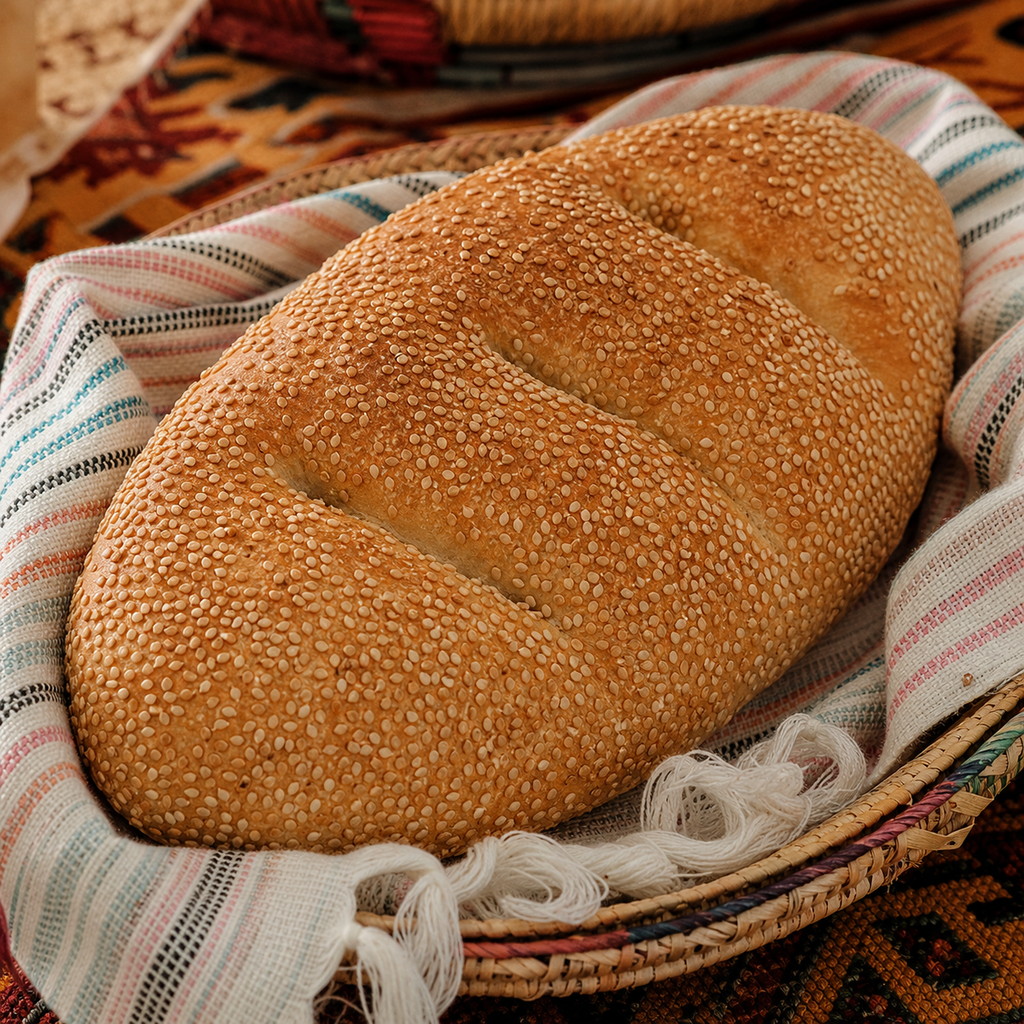
Preparation: 20 min · Cooking: 10 min · Total: 1 hr 35 min · 2 servings
Ingredients
- 1 tsp Sesame seeds
- 0.5 tsp Fine salt
- 465 ml All-purpose flour FOR DOUGH
- 15 ml All-purpose flour RESERVED for kneading and shaping
- 1 tsp Instant dry yeast
- 1 tsp Sugar
- 180 ml Warm dough water, about 30°C
- 1 tbsp Pasteurized milk for brushing ONLY
Instructions
Reserve the 15 ml dusting flour separately from 465 ml dough flour.
Reserve the 15 ml dusting flour separately from 465 ml dough flour. Half uses 232.5 + 7.5 ml; fourfold uses 1860 + 60 ml.
Stir the dough flour, instant yeast, sugar and salt together in a clean bowl.
Stir the dough flour, instant yeast, sugar and salt together in a clean bowl. No dusting flour enters the initial mix.
Pour the 180 ml base warm water slowly into the bowl.
Pour the 180 ml base warm water slowly into the bowl. Mix until a cohesive dough forms.
Knead on a clean counter from 8 minutes until smooth and elastic.
Knead on a clean counter from 8 minutes until smooth and elastic. Use only as much of the reserved dusting flour as needed, with the remainder saved for shaping.
First check: 480 seconds
Return dough to the bowl and cover while away from heat.
Return dough to the bowl and cover while away from heat. Let rise from 45 minutes until doubled; room temperature changes the timing.
First check: 2700 seconds
Press the risen dough gently to release large air bubbles.
Press the risen dough gently to release large air bubbles. Divide into 4 equal small loaves for the base, 2 for half or 16 for fourfold.
Use the remaining reserved flour on the shaping surface.
Use the remaining reserved flour on the shaping surface. Stretch each oval gently into a diamond without adding extra flour.
Let the shaped loaves rest from 15 minutes until slightly puffy.
Let the shaped loaves rest from 15 minutes until slightly puffy. Keep them protected from raw ingredients and drying.
First check: 900 seconds
Preheat the conventional oven to 250°C with a suitable metal baking tray.
Preheat the conventional oven to 250°C with a suitable metal baking tray. Use only an oven and tray rated for this setting, not an arbitrary maximum.
Brush the measured pasteurized milk over all loaves.
Brush the measured pasteurized milk over all loaves. Distribute the measured sesame over their surfaces.
Transfer loaves safely to the hot tray using suitable tools and dry oven gloves.
Transfer loaves safely to the hot tray using suitable tools and dry oven gloves. Bake uncovered at 250°C in uncrowded batches; Samoon does not use a fitted lid.
Start checking the 250°C bake around 5–6 minutes.
Start checking the 250°C bake around 5–6 minutes. Continue until the bread is golden and the interior is fully cooked without raw dough, not colour alone.
First check: 360 seconds
Cool the baked loaves on a clean rack before handling.
Cool the baked loaves on a clean rack before handling. Never taste raw dough; wash hands and tools after handling flour.
Tips
- Cup = 240 ml; tbsp = 15 ml; tsp = 5 ml. Ingredients scale exactly; instruction amounts describe the base 2 servings. Use the same method at half and fourfold scale, with suitable vessels and manageable batches. Times are first checks, not doneness guarantees.
Common mistakes
- Do not restore old scaffold ingredients or treat conditional additions and recovered broth as extra fixed consumed yield. Keep raw foods separate from ready-to-eat ingredients.
Substitutions
- Only stated alternatives are included. Check product ingredients and allergens; use pasteurized dairy.
Storage
Cool baked bread on a clean rack. Store protected, cool and dry for up to 2 days as a selected quality limit, not a preservation guarantee.
Reheating
Warm only baked bread briefly if desired; never eat raw dough.
About this recipe
Samoon Bread is presented as the owner's Iraqi household version. Historical exclusivity, ancient origins and health benefits are not independently authenticated.
Editorial approval does not establish independent kitchen testing. Check allergens and follow safe food handling.