Rosquillas Nicaragüenses
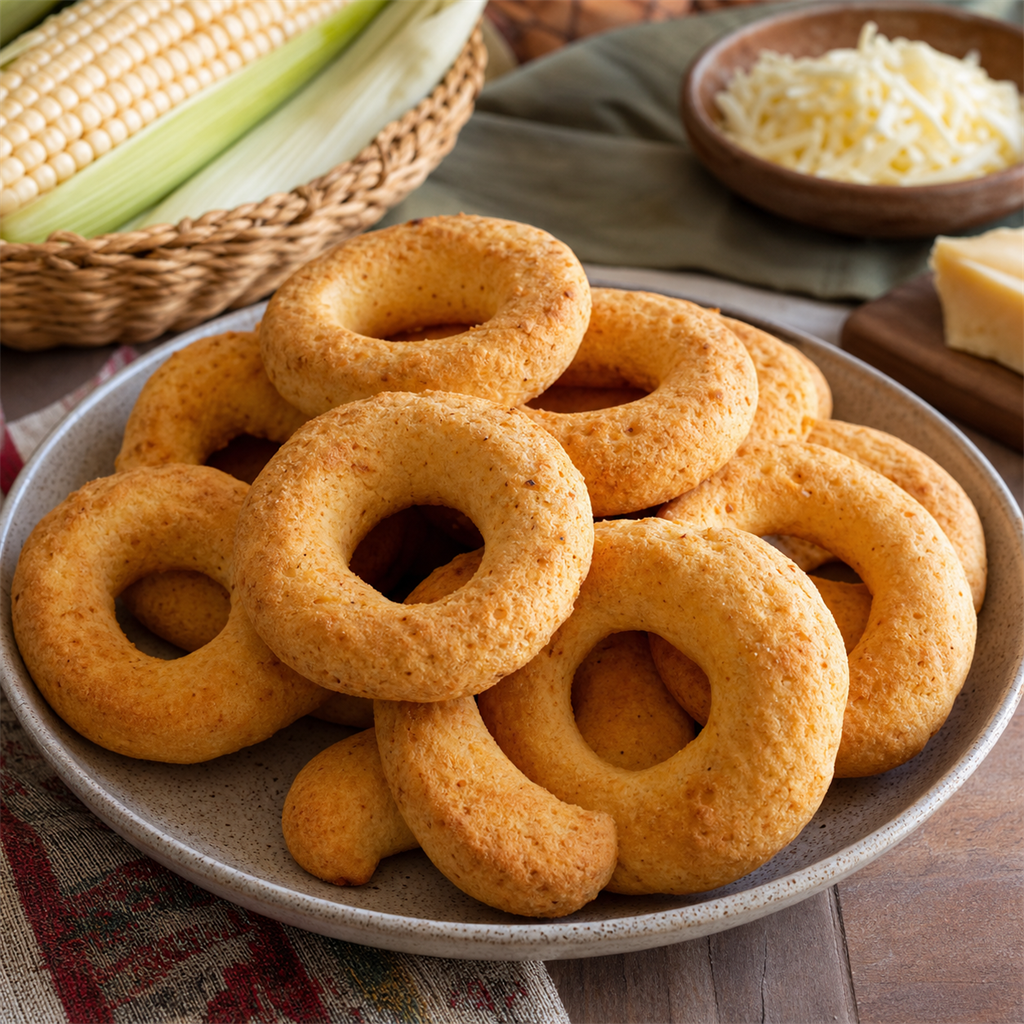
Crisp Nicaraguan rings of nixtamalized corn and dry cheese, traditionally served with coffee.
Preparation: 25 min · Cooking: 30 min · Total: 1 hr 50 min · 6 servings
Ingredients
- 400 g nixtamalized corn flour (masa harina) — Use plain white masa harina, not cornstarch or sweet cornmeal.
- 250 g queso seco or another firm dry salty cheese — Finely grated; cotija is a practical substitute.
- 1 pc large egg — Keep refrigerated until use.
- 220 ml warm water — Add gradually; up to 40 ml may remain.
- 90 g lard or unsalted butter, softened
- 2 g fine salt — About 1/3 teaspoon; reduce if the cheese is very salty.
Instructions
Heat the oven and prepare the trays
Heat the oven to 160°C conventional (140°C fan) with a rack in the middle. Line two baking trays. Keep the egg and cheese refrigerated until measuring, and wash hands after handling the raw egg.
Prepare the cheese and dry mixture
Finely grate the queso seco. Whisk the nixtamalized corn flour with the salt, then rub in the grated cheese and softened lard until the mixture is evenly crumbly. Beat the egg separately. Queso seco is salty, so do not add extra salt before tasting a fully baked test ring.
Mix and rest the dough
Mix in the beaten egg. Add the warm water gradually, kneading for 3–4 minutes, until the dough is smooth, firm, and pliable rather than sticky. The exact water needed varies with the flour and cheese. Cover and rest for 10 minutes; if the dough cracks deeply when rolled, knead in water 1 teaspoon at a time.
Shape and bake the rings
Divide the dough into 24 equal pieces. Roll each into a 10 cm rope about 1.5 cm thick, join the ends firmly, and place the rings 2 cm apart on the trays. Bake one tray at a time for 25–35 minutes. Start the preserved 30-minute timer when the tray enters the oven, rotate after 15 minutes, and begin checking at 25 minutes.
Bake the Nicaraguan rosquillas: 1800 seconds
Cool until crisp
Transfer the baked rings to a wire rack and cool completely for at least 45 minutes. They become crisper as steam escapes; do not seal them while warm because trapped condensation makes them soft and encourages spoilage.
Check the finished rosquillas
A finished rosquilla is dry, firm, pale golden, and crisp after cooling, with no damp or gummy line in a broken test ring. The egg dough must be fully baked; if checked with a thermometer, the centre should reach at least 71°C. If the rings remain soft after cooling briefly, bake for 5 more minutes and check again.
A finished rosquilla is dry, firm, pale golden, and crisp after cooling, with no damp or gummy line in a broken test ring. The egg dough must be fully baked; if checked with a thermometer, the centre should reach at least 71°C. If the rings remain soft after cooling briefly, bake for 5 more minutes and check again.
Serve and store safely
Serve four small rosquillas per portion with coffee or another drink. Once completely cool, store them airtight in a cool, dry place for up to 3 days, or freeze for up to 2 months. Discard any ring that develops moisture, mould, or an off smell.
Tips
- The dough should feel like firm modelling clay. Add water gradually because cheese moisture varies.
Common mistakes
- Making the dough wet produces dense rings that stay soft.
- Packing warm rings traps steam and destroys their crisp texture.
Substitutions
- Use finely grated cotija for queso seco; for a pork-free version, use unsalted butter instead of lard.
Storage
Cool completely, then keep airtight in a cool, dry place for up to 3 days or freeze for up to 2 months.
Reheating
Reheating is optional. To restore crispness, heat at 150°C for 5–7 minutes, then cool for 5 minutes before eating.
About this recipe
Rosquillas from Somoto in Nicaragua's Madriz department are crisp rings made from nixtamalized corn and dry cheese, traditionally dipped into coffee.
Editorial approval does not establish independent kitchen testing. Check allergens and follow safe food handling.