Masgouf — Home-oven Adaptation
Whole carp with a pomegranate, tomato and curry glaze.
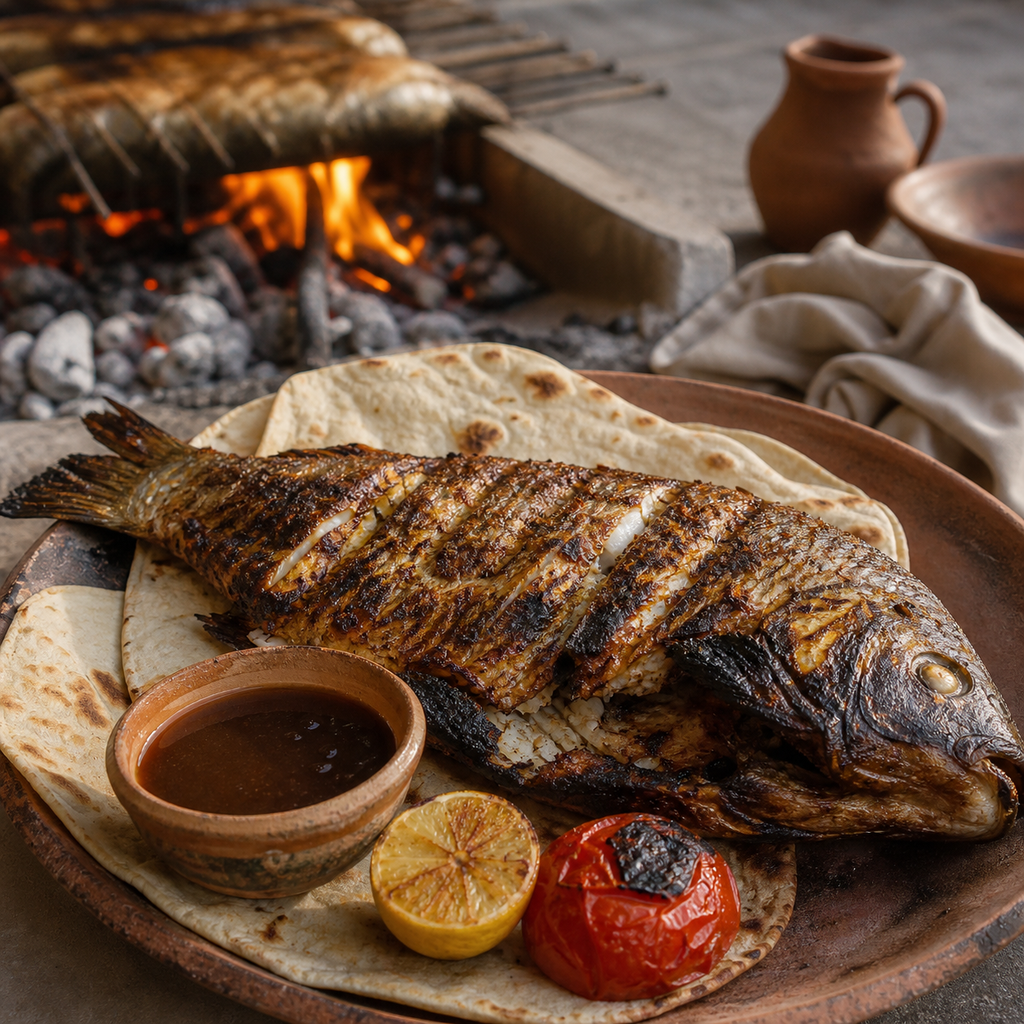
Preparation: 15 min · Cooking: 45 min · Total: 1 hr 30 min · 2 servings
Ingredients
- Whole prepared butterflied carp, about 1 kg reference size including bones — 1
- 2 tbsp Coarse sea salt
- 2 tbsp Pomegranate molasses
- 1 tbsp Tomato paste
- 2 cloves Garlic, crushed
- 1 tbsp Curry powder
Instructions
Select prepared chilled fish
Use commercially supplied cleaned butterflied carp from a maintained cold chain. Keep fish refrigerated at 4°C or colder and raw-fish tools separate from ready-to-eat food. A base fish is about 1 kg reference size including bones; half is half that same fish, fourfold four similarly sized fish.
Salt-rest in the refrigerator
Pat fish dry with disposable towels and apply the measured coarse salt. Rest covered for about 30 minutes in the refrigerator at 4°C or colder, not on a room-temperature board.
Salt-rest in the refrigerator: 1800 seconds
Mix the glaze separately
Combine the measured pomegranate molasses, tomato paste, garlic and curry in a clean bowl with clean utensils. Keep it separate from raw-fish contact for the finishing stage.
Preheat for conventional baking
Preheat the conventional oven to 200°C within its ratings. Use a suitable oven/broiler-rated nonstick metal tray or rack without added grease; no unlisted oil or parchment under direct broiling is included.
Bake with monitored checks
Lay the fish skin-side down and bake at 200°C, beginning checks around 30 minutes. Release carefully if it sticks; the time and white colour alone do not guarantee a cooked centre.
Bake with monitored checks: 1800 seconds
Glaze with clean tools
Brush the separately prepared glaze across the fish with a clean brush. Do not reuse a raw-contact brush or uncooked contaminated marinade on finished fish.
Finish only with supported broiler settings
Use a broiler finish only according to appliance and tray/rack instructions for settings and clearances. Supervise from the start; the source 8–10 minutes is only a possible check range, never a reason to leave sugary glaze unattended. No universal 200°C broil or closest-to-flame placement is prescribed.
Verify fish temperature and serve
Verify 63°C in the thickest edible fish parts away from bones, continuing controlled cooking if needed. Serve hot and watch for bones and hard scales; no boneless yield is promised. This home-oven method applies at every scale, not a large-batch bonfire technique.
Store safely
Cool promptly in shallow portions and refrigerate, aiming within 1 hour, at 4°C or colder. Use within 24 hours. This is a selected conservative household limit, not a validated shelf life. Follow any shorter product use-by limit; keep cream separate until serving where possible.
Tips
- Cup = 240 ml, tbsp = 15 ml and tsp = 5 ml. Ingredient amounts scale exactly; instruction amounts describe the base 2 servings. Use compatible equipment and manageable batches; times are first checks, not readiness guarantees.
Common mistakes
- Do not restore ingredients from an older draft or count process water, frying media, prepared syrup and conditional additions as a fixed consumed yield. Keep raw foods separate from ready-to-eat food.
Substitutions
- Only explicitly listed alternatives are included. Follow prepared-product labels; do not substitute unknown-acidity vinegar, unpasteurized dairy or a different raw/frozen pocket process.
Storage
Cool promptly in shallow portions and refrigerate, aiming within 1 hour, at 4°C or colder. Use within 24 hours. This is a selected conservative household limit, not a validated shelf life. Follow any shorter product use-by limit; keep cream separate until serving where possible.
Reheating
Reheat only the portion needed, at most once, to 74°C throughout. Rice leftovers must have been cooled promptly and used within 24 hours; do not repeatedly rewarm cream-topped pastry.
About this recipe
Masgouf — Home-oven Adaptation is presented as the owner's Iraqi household version or stated adaptation. Ancient origin, national exclusivity, universal customs, preservation efficacy and medical benefits are not independently authenticated.
Editorial approval does not establish independent kitchen testing. Check allergens and follow safe food handling.