Mahshi Waraq Enab
Egyptian vegetables or leaves filled loosely with rice, tomato and fresh herbs; broth choice is explicit.
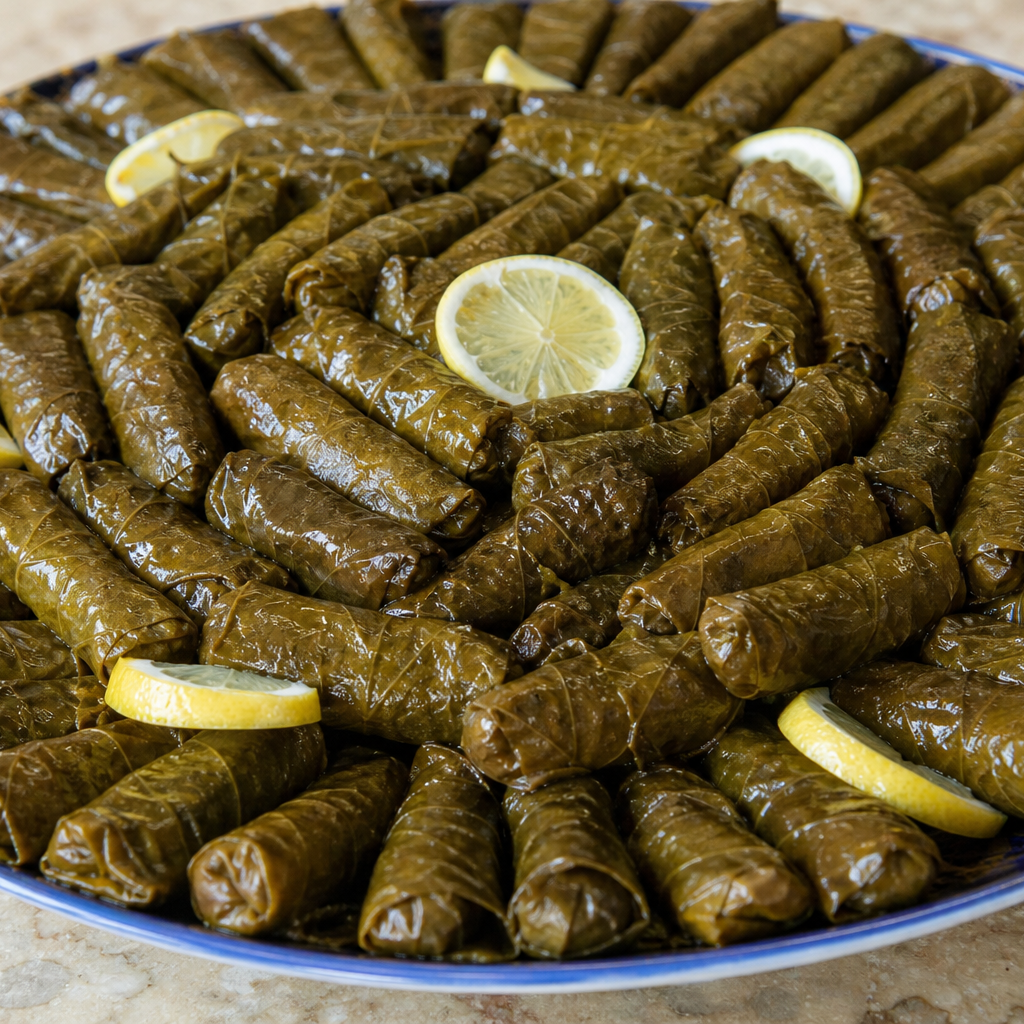
Preparation: 35 min · Cooking: 1 hr · Total: 1 hr 35 min · 2 servings
Ingredients
- 200 g commercially brined grape leaves, drained weight
- 1 cup dry Egyptian short-grain rice
- 240 ml pourable tomato sauce or passata, not concentrated paste
- onion for filling — 1
- 120 ml mixed parsley and dill, combined volume
- 360 ml chicken broth
- conditional additional boiling broth, matching the listed broth
- onion for pot lining — 1
- tomato for pot lining — 1
- large lemon, juice only — 1
Instructions
Prepare the vegetables and rice
Use 200 g drained commercially brined grape leaves, prepared and rinsed as the label directs; this is not a raw-fresh-leaf method. Wash herbs and lining produce. Chop the filling onion and herbs; slice the separate lining onion and tomato. Rinse the dry-measured rice as directed and drain.
Rinse the dry-measured rice as directed and drain.
Mix the measured filling
Mix 1 cup dry-measured drained rice with 240 ml pourable tomato sauce, the filling onion and 120 ml mixed herbs in total. Add the listed seasonings; do not puree the rice. One cup is 240 ml, not 240 g.
One cup is 240 ml, not 240 g.
Fill loosely and cook any surplus
Lay a leaf shiny side down. Add a small amount of filling suited to its size. Fold the bottom over the filling, tuck the sides in and roll securely but not tightly; leave space for rice expansion. Do not force surplus filling into the leaves. Cook any excess filling immediately in a separate covered pan with additional boiling broth about 1 cm above the mixture. Bring to a boil and simmer gently; add small amounts of boiling broth if drying before the rice is fully tender. Serve alongside; do not leave raw filling waiting.
Serve alongside; do not leave raw filling waiting.
Arrange and add cooking liquid
Line the pot with the separate sliced onion and tomato; arrange rolls over them. Add 360 ml initial chicken broth and the juice of 1 large lemon. Add conditional boiling chicken broth to just cover rolls. Use only a cooking-rated weight or heat-rated plate to hold them down; no unlisted garlic or lamb.
Use only a cooking-rated weight or heat-rated plate to hold them down; no unlisted garlic or lamb.
Simmer and begin checking
Bring the pot to a boil, then cover and maintain a gentle simmer over low heat. Begin checking after 45 minutes. Watch liquid levels and add conditional boiling broth as needed, without compressing the food.
Watch liquid levels and add conditional boiling broth as needed, without compressing the food.
Check the stuffed rice: 2700 seconds
Check filling centres
Check rice in several thick central pieces: all grains must be fully tender without hard or chalky centres. The confirmed conservative target is 74°C in the filling, not a universal statutory vegetable temperature. Continue cooking if needed; soft shells alone are insufficient.
Continue cooking if needed; soft shells alone are insufficient.
Portion without crushing
Lift the fully cooked pieces gently with clean utensils. Remove any cooking weight before serving. Use equivalent pots for 8 portions rather than compressing food into a deeper pot; piece counts vary with vegetable size.
Use equivalent pots for 8 portions rather than compressing food into a deeper pot; piece counts vary with vegetable size.
Serve and chill rice promptly
Serve the fully cooked Mahshi with any separately cooked filling. Divide leftovers into shallow portions and refrigerate within one hour at ≤4°C. Use within 24 hours and reheat at most once to 74°C throughout; reheating cannot rescue improperly stored rice.
Use within 24 hours and reheat at most once to 74°C throughout; reheating cannot rescue improperly stored rice.
Tips
- Instruction quantities describe the original two-serving batch. Ingredient controls scale the list to one or eight servings. One cup is 240 ml; tablespoon 15 ml and teaspoon 5 ml. Volumes are not gram weights. Use equivalent vessels/batches when scaling.
Common mistakes
- Do not add inherited draft ingredients or treat appearance and fixed times as the only cooking checks.
Substitutions
- Use the listed ingredient states and alternatives. Check product directions and allergens; unlisted replacements may change handling and storage.
Storage
Refrigerate promptly within one hour in shallow portions at ≤4°C. Use within 24 hours from preparation, including setting/chilling. These are conservative household limits, not a validated shelf life.
Reheating
Reheat at most once to 74°C throughout. Reheating cannot rescue food that was stored improperly.
About this recipe
Egyptian vegetables or leaves filled loosely with rice, tomato and fresh herbs; broth choice is explicit.
Editorial approval does not establish independent kitchen testing. Check allergens and follow safe food handling.