Shrimp Liboké
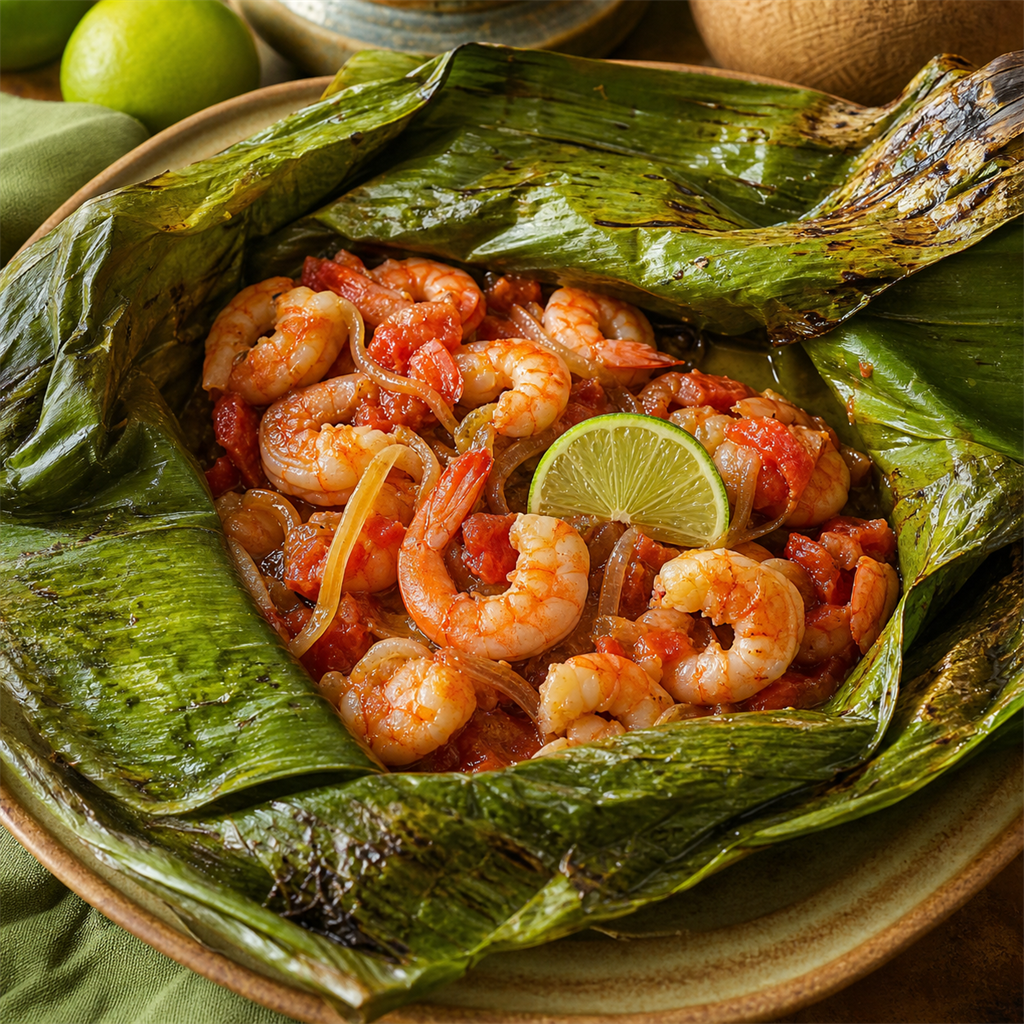
Gabon-inspired shrimp parcels using the Congo-basin liboké banana-leaf method.
Preparation: 20 min · Cooking: 10 min · Total: 30 min · 4 servings
Ingredients
- 500 g shrimp
- 250 g banana leaf
- 2 pc tomato
- 1 pc onion
- 1 pc lime
Instructions
Prepare the ingredients
Peel and devein 500 g raw shrimp; keep chilled. Rinse and soften 250 g banana leaves briefly in hot water so they can fold without tearing. Dice 2 tomatoes and 1 onion; halve the lime.
Build the dish
Divide the shrimp, diced tomatoes and onion among 4 softened banana-leaf parcels. Squeeze half the lime over them, fold the leaves closed and steam over simmering water for 8–10 minutes. Check a thick shrimp: it must be opaque and firm with no translucent centre.
The shrimp are opaque and firm throughout, with no translucent raw centre.
Cook Shrimp Liboké: 600 seconds
Balance and finish
Open the hot parcels away from your face to avoid steam burns. Squeeze the remaining half lime over the cooked shrimp; taste the juices.
Serve
Serve each opened parcel on a plate with the tomato and onion juices. The banana leaf is a wrapper, not food; discard it after eating.
The shrimp are opaque and firm throughout, with no translucent raw centre.
Tips
- Fold the softened banana leaves tightly so the juices stay inside the four parcels.
- Check a thick shrimp at 8 minutes; stop steaming when all shrimp are opaque and firm.
Common mistakes
- Steaming shrimp for 45 minutes makes them rubbery; 8–10 minutes is a guide, not a substitute for checking doneness.
- Dry, unsoftened leaves can split and leak juices into the steamer.
Substitutions
- Use 500 g firm fish pieces instead of shrimp; steam until opaque and cooked through, adjusting time to thickness.
Storage
Remove cooked shrimp from the leaves and refrigerate at 4°C or below within 2 hours; eat within 2 days.
Reheating
Reheat the shrimp and vegetables gently until piping hot throughout (74°C); do not reheat in old leaves or repeatedly.
About this recipe
Liboké is a banana-leaf parcel method from the Congo basin. This shrimp version is a Gabon-inspired regional adaptation, not a claim of Gabonese origin for the method.
Editorial approval does not establish independent kitchen testing. Check allergens and follow safe food handling.