Kubba Shamiyya
Fresh pure-rice pockets with peppered beef, without bulgur or potato.
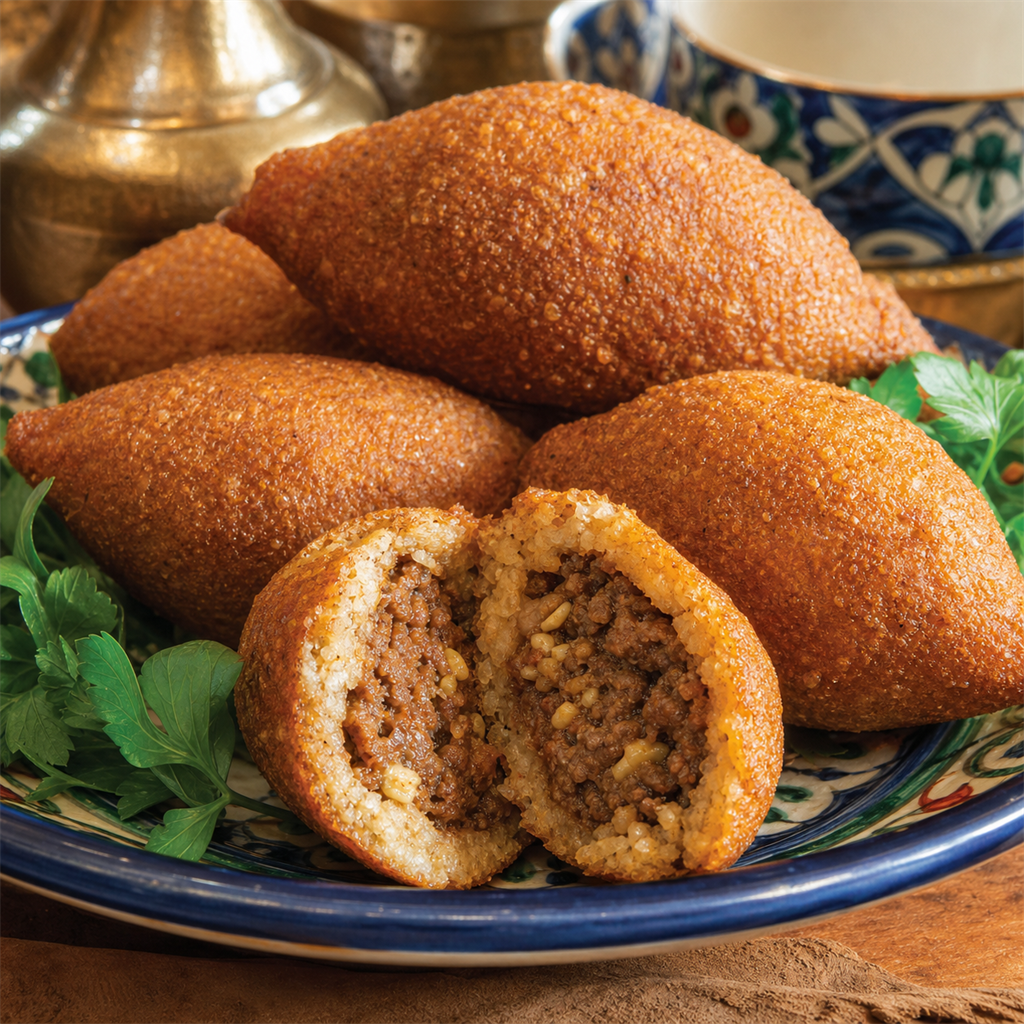
Preparation: 40 min · Cooking: 40 min · Total: 1 hr 50 min · 2 servings
Ingredients
- 150 g Raw very lean minced beef
- Small onion, finely chopped — 0.5
- 240 ml Dry jasmine rice
- 360 ml Initial water for cooking the rice shell
- 0.25 tsp Ground black pepper
- 480 ml Initial vegetable oil for deep-frying, process medium
- Salt, to taste
- Extra boiling rice water only if needed; measure additions (optional)
- Small separate process water allowance for damp hands
- Extra frying oil only if safe vessel depth requires it (optional)
Instructions
Measure the shell ingredients
Measure dry jasmine rice before rinsing. For two base servings use 240 ml rice and 360 ml initial water; no potato or bulgur is included.
Cook until fully soft
Bring the measured shell ingredients with salt to a boil, then maintain a gentle simmer. Begin checks around 20 minutes, following suitable rice package guidance, until rice is fully cooked and mashable. Use separately measured boiling-water top-ups only if needed; absorption alone does not prove readiness.
Cook until fully soft: 1200 seconds
Mash with safe utensils
After the initial 20-minute check, continue until the mixture is fully cooked and mashable. Mash off heat with a sturdy suitable utensil while safely warm. Do not knead scalding rice by hand or use an unspecified hot-rice meat mincer; a tear-free paper-thin shell is not guaranteed.
Cook the filling
Cook the minced beef and onion over medium heat in a suitable nonstick skillet with their released juices/fat, without unlisted sauté oil. Begin checks around 7 minutes and verify 74°C throughout the filling; drain excess rendered fat safely if present.
Cook the filling: 420 seconds
Season and chill both components promptly
Add measured black pepper and salt while the filling is hot. Portion both rice dough and cooked filling shallowly and refrigerate promptly, aiming within 1 hour at 4°C or colder. Shape with cooled components; do not wait for complete counter cooling.
Divide matching portions
Divide all cooled shell dough and filling into matching manageable portions. Do not force a fixed teaspoon into every pocket or invent a pocket count. Handle any unavoidable excess filling separately and safely.
Shape and seal fresh pockets
Lightly damp hands using the separate process allowance only as needed. Enclose matching filling and seal soundly into pointed spindles. Keep waiting pockets chilled and unfrozen; avoid pooled surface water and wet tools near oil. The shell and meat have already been cooked.
Heat the measured frying oil
Heat oil toward 175°C in a suitable deep vessel with headroom, thermometer and manageable uncrowded batches. Base 480 ml becomes 240 ml half or 1920 ml fourfold, not 960 ml fourfold. Extra oil is conditional on safe vessel depth and is not wholly consumed food.
Fry and verify cooked centres
Lower fresh pockets carefully into oil and begin checks around 4–5 minutes. Continue until shells are fully cooked and filling centres reach 74°C; measure a sample after safe removal from oil. Blisters, crispness or golden colour alone are insufficient.
Fry and verify cooked centres: 240 seconds
Drain and serve safely
Drain with suitable utensils and allow safe handling before serving hot. Keep this pure-rice/beef version distinct; no freezer procedure or guaranteed blistering is implied.
Store safely
Cool promptly in shallow portions and refrigerate, aiming within 1 hour, at 4°C or colder. Use within 24 hours. This is a selected conservative household limit, not a validated shelf life. Follow any shorter product use-by limit; keep cream separate until serving where possible.
Tips
- Cup = 240 ml, tbsp = 15 ml and tsp = 5 ml. Ingredient amounts scale exactly; instruction amounts describe the base 2 servings. Use compatible equipment and manageable batches; times are first checks, not readiness guarantees.
Common mistakes
- Do not restore ingredients from an older draft or count process water, frying media, prepared syrup and conditional additions as a fixed consumed yield. Keep raw foods separate from ready-to-eat food.
Substitutions
- Only explicitly listed alternatives are included. Follow prepared-product labels; do not substitute unknown-acidity vinegar, unpasteurized dairy or a different raw/frozen pocket process.
Storage
Cool promptly in shallow portions and refrigerate, aiming within 1 hour, at 4°C or colder. Use within 24 hours. This is a selected conservative household limit, not a validated shelf life. Follow any shorter product use-by limit; keep cream separate until serving where possible.
Reheating
Reheat only the portion needed, at most once, to 74°C throughout. Rice leftovers must have been cooled promptly and used within 24 hours; do not repeatedly rewarm cream-topped pastry.
About this recipe
Kubba Shamiyya is presented as the owner's Iraqi household version or stated adaptation. Ancient origin, national exclusivity, universal customs, preservation efficacy and medical benefits are not independently authenticated.
Editorial approval does not establish independent kitchen testing. Check allergens and follow safe food handling.