Gulab Jamun
Soft milk dumplings soaked in cardamom syrup.
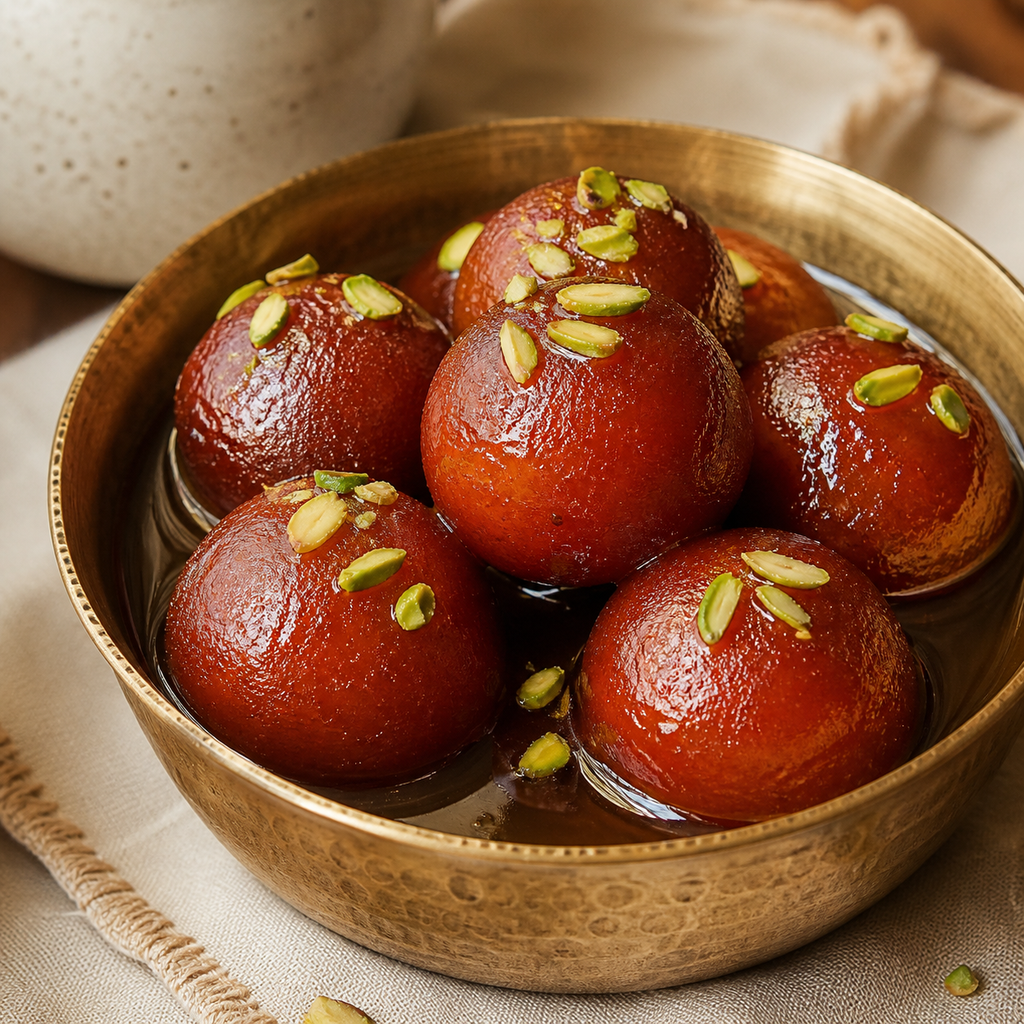
Preparation: 25 min · Cooking: 40 min · Total: 1 hr 35 min · 10 servings
Ingredients
- 180 g milk powder
- 40 g all-purpose flour
- 60 g plain yogurt
- 350 g sugar
- 4 pc cardamom pods
- 300 ml water — For the cardamom syrup.
- 750 ml neutral oil for frying — Choose a deep pot in which 750 ml makes about 5 cm depth without filling more than one-third of the pot.
Instructions
Measure the ingredients
Measure 180 g milk powder, 40 g flour, 60 g yogurt, 350 g sugar, 300 ml water, 4 cardamom pods, and 750 ml frying oil.
All ingredients are measured before the syrup or oil is heated.
Prepare the cardamom and frying station
Lightly crush the 4 cardamom pods. Pour the 300 ml water into a saucepan and the 750 ml oil into a separate deep pot no more than one-third full.
Make the cardamom syrup
Combine the 350 g sugar, 300 ml water, and crushed cardamom. Simmer over medium-low heat for 8 minutes, until the sugar is dissolved and the syrup lightly coats a spoon but still pours freely.
The clear syrup lightly coats a spoon but still pours freely.
Simmer the cardamom syrup: 480 seconds
Mix a soft dough
Mix the 180 g milk powder with the 40 g flour. Add the 60 g yogurt a little at a time until a soft dough forms; stop mixing as soon as no dry patches remain.
The dough is soft and cohesive, not sticky or crumbly.
Shape smooth balls
Divide the dough into 20 equal portions. Roll each portion gently between your palms until smooth and free of cracks.
All 20 balls are smooth, evenly sized, and have no visible cracks.
Heat the oil gently
Heat the 750 ml oil over medium-low heat to 150°C. Keep it between 145°C and 155°C so the centers cook before the outside darkens.
A thermometer reads 150°C and the oil is not smoking.
Fry until evenly brown
Lower five dough balls at a time into the 150°C oil. Fry for 6–8 minutes, moving them gently, until evenly deep golden brown. Lift the batch out with a dry slotted spoon and drain on a rack. Cut one open before soaking: if the center is raw, return the unsyruped batch to the 145–155°C oil briefly, drain, and check again. Soak the cooked batch as in the next step, then let the oil return to 150°C and repeat until all 20 balls are fried.
The balls are evenly brown and a test piece has no raw or dry center.
Soak in warm syrup
For each fully cooked, drained batch, gently rewarm the cardamom syrup if it has cooled, without boiling it. Transfer the warm balls into the warm syrup and leave them for at least 30 minutes after the final batch is added, until the syrup reaches their centers.
The dumplings look plump and feel soft when gently pressed.
Soak the gulab jamun: 1800 seconds
Check the syrup has reached the centers
Cut one soaked gulab jamun from each batch in half. The center should be evenly moist with syrup, with no dry powder. If any center is dry, leave that batch in the syrup longer and check again; never refry syrup-soaked dumplings.
The checked centers are evenly moist with syrup and have no dry core.
Serve with syrup
Serve the gulab jamun warm or at room temperature with a spoonful of cardamom syrup. Refrigerate leftovers in syrup within 2 hours, or within 1 hour above 32°C; use within 3 days.
The dumplings are soft, syrupy, and intact when served.
Tips
- A timer tells you when to check; the doneness and safety cues determine when the food is ready.
- Contains milk and wheat; check packaged milk powder, yogurt, and frying oil for other allergens.
Common mistakes
- Hot oil browns the outside before the inside cooks.
- Hard dough makes dense dumplings.
Substitutions
- Use saffron in the syrup for a richer aroma.
Storage
Refrigerate in a shallow covered container with the syrup at 4°C or below within 2 hours, or within 1 hour above 32°C. Use within 3 days.
Reheating
Warm gently in the syrup over low heat until hot throughout, reaching 74°C. Do not boil or refry; serve immediately.
About this recipe
Gulab jamun is a festive South Asian sweet served at celebrations and family gatherings.
Editorial approval does not establish independent kitchen testing. Check allergens and follow safe food handling.