Dukkah Eggs
Egyptian-inspired fried eggs with crunchy dukkah, olive oil, bread and parsley.
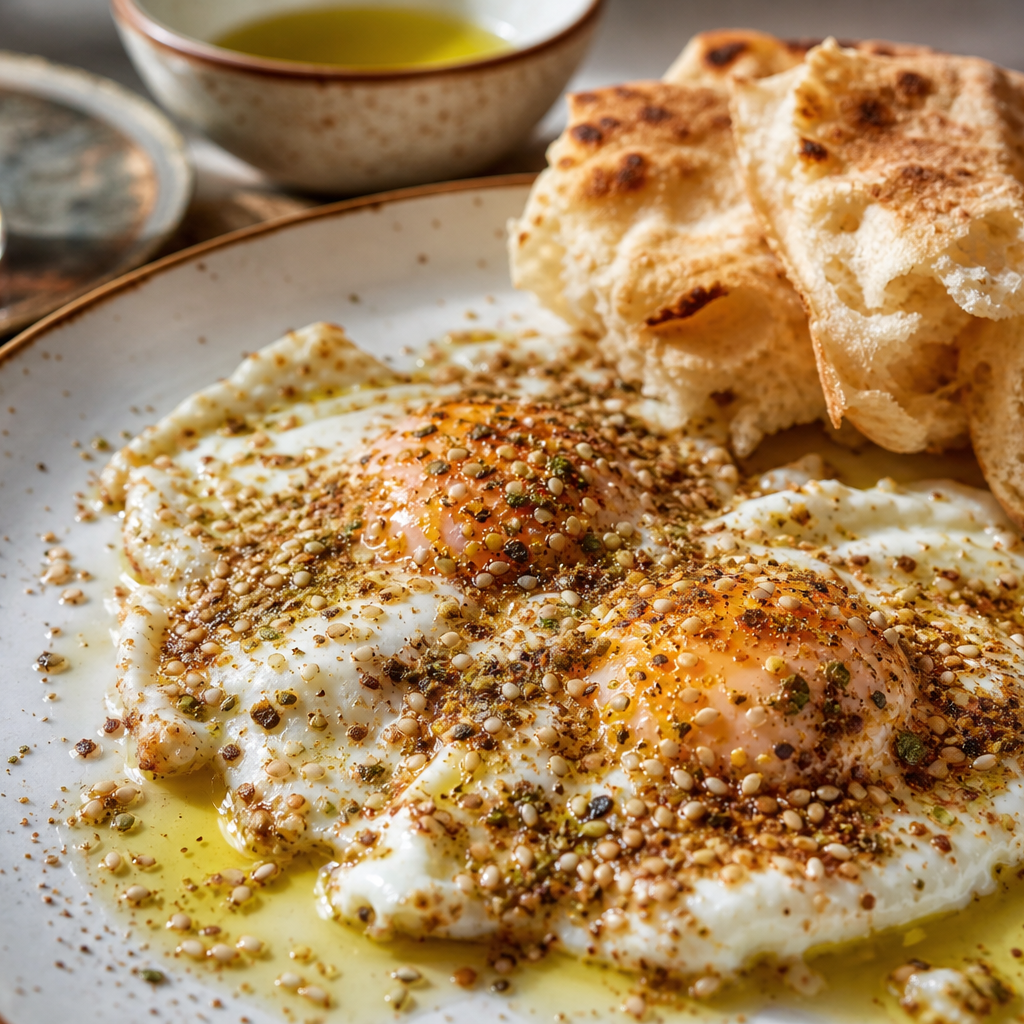
Preparation: 8 min · Cooking: 12 min · Total: 20 min · 4 servings
Ingredients
- 4 pc eggs — Four eggs, one per serving; contains egg. Keep chilled until cooking.
- 40 g prepared dry dukkah — Contains hazelnuts/tree nuts and sesame; check the blend label.
- 20 ml olive oil — Use 10 ml for each two-egg batch.
- 240 g baladi bread — Contains wheat/gluten; four 60 g portions.
- 10 g fresh parsley — Wash, dry and chop; garnish after cooking.
Instructions
Measure four portions
Measure 4 chilled eggs, 40 g prepared dry dukkah, 20 ml olive oil, 240 g baladi bread and 10 g fresh parsley. This makes four portions with one egg each. Eggs, hazelnuts and sesame in the dukkah, and wheat in the bread are allergens.
Wash parsley and keep dukkah dry
Wash, dry and chop the parsley. Put the dry dukkah in a clean bowl for topping after cooking; keep it away from raw egg and keep the eggs refrigerated until each batch is ready.
Warm the bread
Warm the 240 g baladi bread in a dry nonstick skillet over medium heat for about 2 minutes, turning once. Set it on a clean plate and cover loosely to keep warm; do not burn it.
Cook the first two eggs
Add 10 ml olive oil to the skillet over medium-low heat. Crack in two eggs, cover with a lid and cook for about 5 minutes until both whites and yolks are firm, with no liquid egg remaining. Lower the heat if the bottoms brown too fast; transfer the cooked eggs to a clean plate.
Whites and yolks firm, with no liquid egg.
Cook first two eggs: 300 seconds
Cook the remaining two eggs
Add the remaining 10 ml olive oil and cook the other two eggs in the same way, covered over medium-low heat for about 5 minutes until whites and yolks are firm. Check the eggs, not just the timer; do not use utensils that touched raw egg on cooked food.
Whites and yolks firm, with no liquid egg.
Cook remaining two eggs: 300 seconds
Plate with dukkah and parsley
Divide the warm bread among four plates, add one cooked egg to each, then sprinkle each with 10 g dry dukkah and one quarter of the chopped parsley. Keep dukkah dry for crunch; do not heat it with the eggs.
Check each egg is fully set
Before serving, check every egg: the white and yolk should both be firm and not runny, and there should be no liquid egg. If any egg is underdone, return it to the covered skillet briefly and recheck. The dukkah should remain dry and crunchy.
Whites and yolks firm, with no liquid egg.
Serve hot and chill leftovers
Serve the four portions hot. Cover and refrigerate any cooked egg leftovers at 4°C or colder within 2 hours; use within 2 days. Store unused dry dukkah and bread separately so they do not become damp.
Tips
- Cook the eggs in two uncrowded batches so each yolk can set without burning the underside.
- Sprinkle prepared dry dukkah only after cooking to preserve crunch; check its label for tree nuts and sesame.
Common mistakes
- Serving runny whites or yolks when this recipe calls for fully set eggs; cook longer if needed.
- Cooking the dukkah in the skillet softens or burns the dry nut-and-seed blend; add it at the end.
Substitutions
- If baladi bread is unavailable, use another wheat flatbread but note the change in style. Do not replace dukkah for someone with nut or sesame allergy without a separately verified allergen-safe blend.
Storage
Best served fresh. Cover cooked egg leftovers and refrigerate at 4°C or colder within 2 hours; use within 2 days. Store unused dry dukkah and bread separately.
Reheating
Reheat leftover eggs until steaming hot throughout (74°C if measured). Warm bread separately and add fresh dry dukkah and parsley after reheating.
About this recipe
Dukkah is an Egyptian toasted nut, seed and spice blend. This egg breakfast is inspired by that Egyptian condiment rather than a single fixed traditional dish; the dry blend adds crunch after the eggs are cooked.
Editorial approval does not establish independent kitchen testing. Check allergens and follow safe food handling.