Dukkah Bread Dip
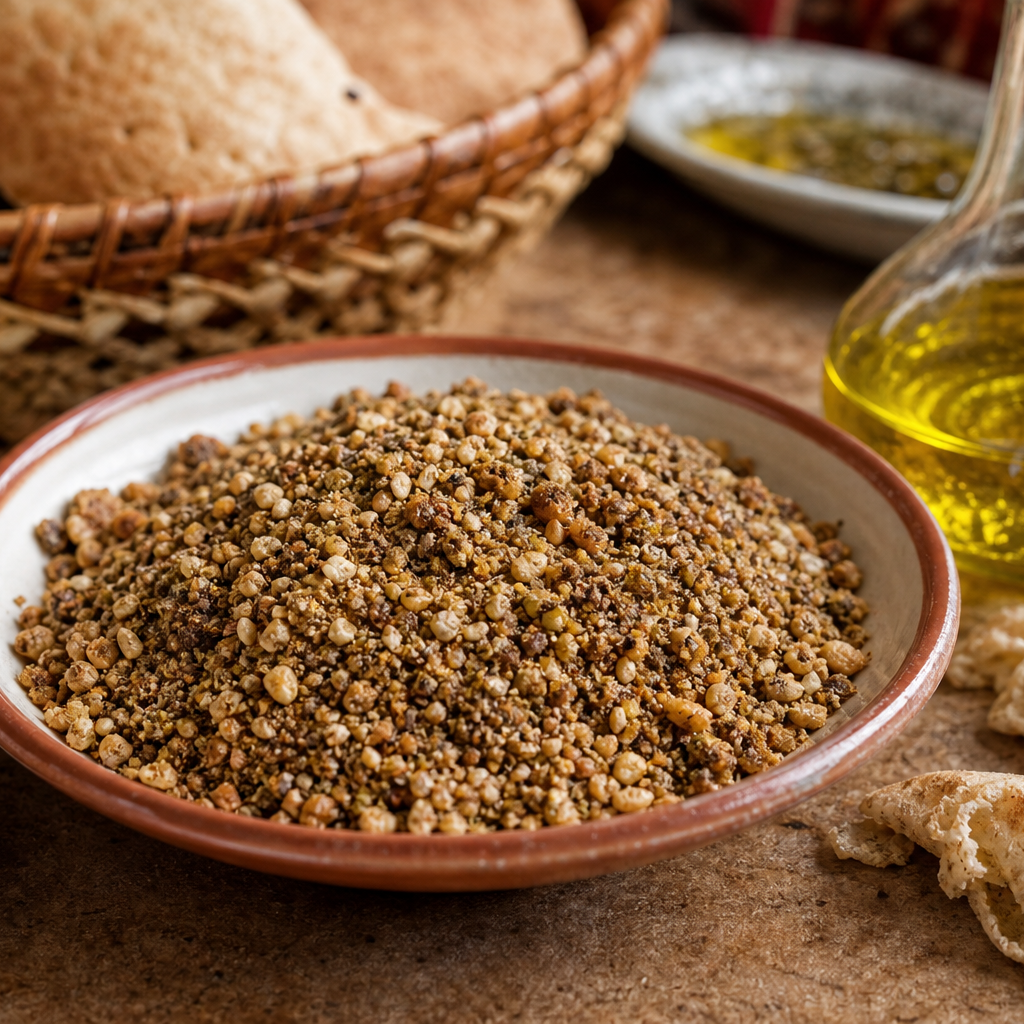
Egyptian toasted nut, seed and spice blend served with baladi bread and olive oil.
Preparation: 10 min · Cooking: 11 min · Total: 26 min · 4 servings
Ingredients
- 100 g shelled hazelnuts — Tree-nut allergen; toast separately.
- 60 g sesame seeds — Sesame allergen; toast briefly.
- 20 g coriander seeds — Whole seeds, not fresh coriander leaves.
- 1 tsp cumin seeds — Whole seeds, not ground cumin.
- 500 g baladi bread — Wheat/gluten allergen; tear into dipping pieces.
- 60 ml olive oil — Serve in a separate bowl for dipping, 15 ml per person.
Instructions
Measure nuts, seeds, bread and oil
Measure 100 g shelled hazelnuts, 60 g sesame seeds, 20 g whole coriander seeds and 1 tsp whole cumin seeds. Set out 500 g baladi bread and 60 ml olive oil for four servings. Hazelnuts, sesame and wheat in the bread are allergens.
Prepare bread and serving bowls
Tear the bread into dipping pieces and keep it covered so it does not dry out. Set out separate clean bowls for olive oil and the finished dry dukkah; do not mix oil into the spice blend.
Warm a dry skillet
Set a heavy dry skillet over medium-low heat. Have a wooden spoon and a plate ready; toast nuts and seeds in separate batches so the smaller seeds do not burn.
Toast the hazelnuts
Add the 100 g hazelnuts to the dry skillet and stir for about 7 minutes until fragrant and lightly golden, not dark or smoking. Transfer them to the plate; rub off loose skins once cool enough to handle.
Fragrant and lightly golden, not dark or smoking.
Toast hazelnuts: 420 seconds
Toast sesame and spice seeds
In the same dry skillet, toast the 60 g sesame seeds for about 1–2 minutes, stirring until lightly golden, then transfer them to the plate. Toast the 20 g coriander seeds and 1 tsp cumin seeds for another 2 minutes until fragrant. The two seed batches take about 4 minutes total; do not let them blacken.
Sesame lightly golden and spice seeds fragrant, none blackened.
Toast seed batches: 240 seconds
Cool and coarsely crush
Let the toasted ingredients cool for about 5 minutes. Pound the coriander and cumin first, then add the hazelnuts and sesame and crush coarsely with a mortar and pestle; leave visible nut and seed pieces, not a smooth paste. Transfer the dry blend to its serving bowl.
Check the dukkah texture
Taste a small amount with a clean spoon. Dukkah should be fragrant, crunchy and coarsely crumbly, without black or bitter burnt pieces. Discard scorched batches rather than grinding them in; the timers are prompts to check, not proof of doneness.
Fragrant, crunchy and coarsely crumbly, without bitter burnt pieces.
Dip bread in oil then dukkah
Divide the 60 ml olive oil between four small dipping dishes (15 ml each). Serve with the 500 g torn baladi bread and the dry dukkah in separate bowls. Dip bread first in oil, then in dukkah; use clean spoons rather than double-dipping. Store unused dry blend separately from bread and used oil.
Tips
- Toast hazelnuts separately from smaller seeds so each becomes fragrant without burning; grind only after cooling.
- Keep the dukkah coarse and dry. Olive oil belongs in a separate bowl so bread can be dipped in oil before the spice blend.
Common mistakes
- Grinding hot nuts too finely releases their oil and makes a paste instead of a coarse crumb.
- Mixing the olive oil into the storage jar spoils the dry texture and shortens keeping quality.
Substitutions
- If baladi bread is unavailable, use another wheat flatbread and note the change in style. Do not substitute hazelnuts for someone with a tree-nut allergy without a separate allergen-safe recipe; sesame is also an allergen.
Storage
Cool the toasted blend completely. Store unused dry dukkah airtight in the refrigerator for up to 1 week, away from bread and dipping oil. Keep bread according to its package; discard oil used for shared dipping.
Reheating
Do not reheat the dry dukkah; serve at room temperature. Warm bread briefly if desired, but use fresh olive oil for dipping.
About this recipe
Dukkah is an Egyptian coarsely crushed blend of toasted nuts, seeds and spices. A familiar way to eat it is to dip bread in olive oil, then into the dry mixture. This version uses baladi bread, hazelnuts, sesame, coriander and cumin.
Editorial approval does not establish independent kitchen testing. Check allergens and follow safe food handling.