Dolmeh Barg
Grape leaves with beef, rice, yellow split peas and measured herbs.
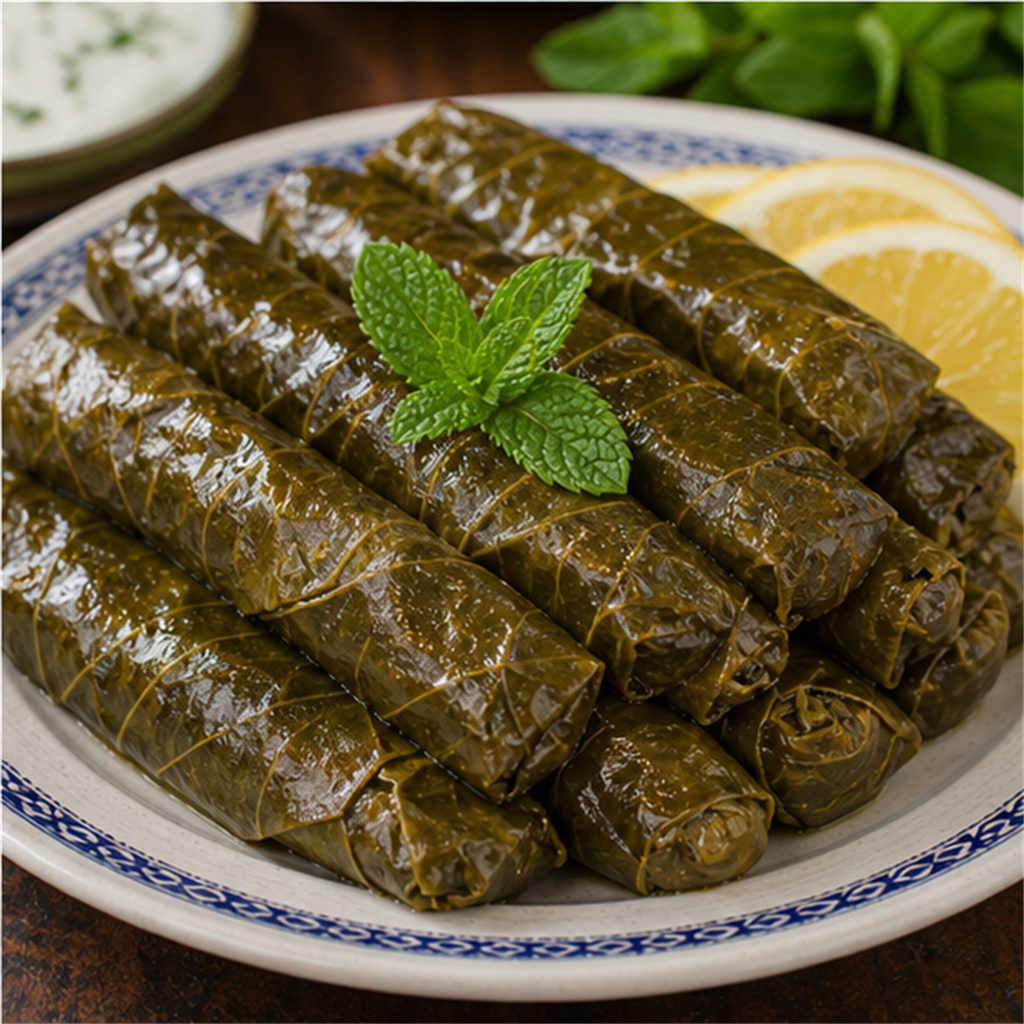
Preparation: 35 min · Cooking: 1 hr 30 min · Total: 2 hr 5 min · 2 servings
Ingredients
- Large usable grape leaves for wrapping, drained — 30
- 120 ml Basmati rice, measured dry before rinsing
- 120 ml Yellow split peas, measured dry
- 200 g Raw ground beef
- Separate grape leaves for pot lining, drained — 4
- Small raw onion, chopped — 1
- 1 tbsp Vegetable oil for onion and beef
- 30 ml Fresh parsley, measured chopped
- 30 ml Fresh dill, measured chopped
- 15 ml Fresh mint, measured chopped
- 15 ml Fresh tarragon, measured chopped
- 0.25 tsp Ground turmeric
- 240 ml Retained braising-sauce water
- 2 tbsp Fresh lemon juice
- 1 tbsp Granulated sugar for sauce
- 750 ml Initial rice parboil water, discarded
- 600 ml Initial split-pea cooking water, discarded
- 1000 ml Leaf blanch water, only for fresh leaves, discarded (optional)
- Salt, to taste
- Ground black pepper, to taste
- Conditional extra hot water, measure only if needed
Instructions
Cook the split peas
Rinse the measured dry yellow split peas. Simmer separately in the initial 600 ml process water, starting checks at 25 minutes and continuing until fully tender before any acidic sauce. Follow compatible package instructions; measure extra hot water only if needed. Do not taste raw peas.
Cook the split peas: 1500 seconds
Drain peas
Once the yellow split peas are fully tender after the 25-minute first check or longer, drain and discard their water. Keep separate from the partly cooked rice.
Parboil rice
Rinse the measured dry basmati. Bring the initial 750 ml parboiling water to a boil, salt to taste and add rice. Check from 7 minutes: grains should soften outside but retain a firm centre, not become fully cooked. Measure any needed extra boiling water separately.
Parboil rice: 420 seconds
Drain safely
Drain the partly cooked rice through a suitable colander, discarding its process water. Use dry grips and manageable batches, away from children. Continue promptly to the hot assembly stage; do not leave parboiled rice waiting warm.
Prepare wrapping leaves
Follow preserved-leaf package preparation. If using fresh edible grape leaves, bring the separate 1000 ml blanch water to a boil and blanch from 1 minute until pliable; drain safely. Count out the 30 usable large wrapping leaves separately from lining leaves.
Prepare wrapping leaves: 60 seconds
Soften onion
Heat the measured oil over medium heat and sauté the chopped onion from 5 minutes until softened without burning.
Soften onion: 300 seconds
Cook the beef
Add the raw ground beef to the onion, break up lumps and cook over controlled medium heat until all mince reaches the selected 74°C household target. Colour alone is not sufficient; official ground-beef guidance is 71°C.
Mix filling
Stir turmeric, all measured chopped herbs and seasoning into the cooked beef, then fold in drained rice and fully tender split peas. Remove from heat and assemble promptly; if delayed, chill promptly in shallow containers and hold at 4°C or colder.
Fill loosely
Lay each wrapping leaf shiny-side down. Use up to about 1 tbsp filling for a suitably large leaf, leave expansion space, fold the sides and roll snugly without compressing the filling. The 30-leaf allowance is not a guarantee all filling fits; keep any excess for separate cooking.
Line and arrange
Line a suitable pot with the separate 4 drained lining leaves. Place the rolls seam-side down in close, uncompressed layers, leaving room for simmering liquid.
Add sauce and cover
Mix all 240 ml sauce water with measured lemon juice and sugar and pour around the rolls. Optionally use a manufacturer-suitable heat-safe hold-down plate with clearance and safe lifting tools, never a pressure seal. Cover with a normal fitted lid, no towel or blocked vent.
Simmer and check
Simmer gently over low heat from 45–60 minutes until leaves, rice and peas are fully tender and filling centres reach 74°C. Measure extra hot water only if needed to avoid drying out. Carefully lift the lid away from you and remove any hot plate with safe tools.
Simmer and check: 2700 seconds
Serve or cook excess separately
Serve the cooked rolls promptly. Any excess filling must be cooked separately until its rice is fully tender and the mixture reaches 74°C, with a measured amount of hot water only if needed; do not serve partly cooked rice.
Tips
- Base batch: quantities are for 2 catalogue servings (minimum 1, maximum 8). Cup = 240 ml; tbsp = 15 ml; tsp = 5 ml. Scale ingredients, not temperatures or automatically the cooking times. Wash produce with potable water and keep raw meat/tools away from ready-to-eat food.
- Timers mark first checks, not guaranteed doneness. Keep water/fat allocations separate, use appropriate cookware and manageable batches, normal fitted lids and no towel seals or blocked vents. Conditional top-ups are measured, never guaranteed final yields.
Common mistakes
- Do not mistake browning or elapsed time for cooked-through food, omit named process inputs, add unlisted garnish fats or leave perishable food waiting warm.
Substitutions
- Use the specified foods, quantities and dry/cooked preparation states. No unmeasured ingredient swap is approved for this master; separate accompaniments do not replace its measured ingredients.
Storage
Chill promptly in shallow portions within 2 hours (1 hour in hot conditions), at 4°C or colder; selected household limit 24 hours, or any shorter label/use-by limit. Cool rice ideally within 1 hour and use within 24 hours. Keep bread/garnishes separate. This is not a validated shelf life; reheating cannot rescue mishandling.
Reheating
Reheat only once to 74°C throughout, steaming hot, checking several places. Reheat only the needed portion and add only a measured amount of water if necessary. Add separate ready-to-eat garnishes with clean tools.
About this recipe
An owner-selected Iranian household version with explicitly measured ingredients and practical home-kitchen steps. Historical exclusivity, medical benefits and exact traditional-origin claims have not been independently verified.
Editorial approval does not establish independent kitchen testing. Check allergens and follow safe food handling.