Date and Orange Cake
One date-and-orange loaf yields eight slices; four loaves yield thirty-two.
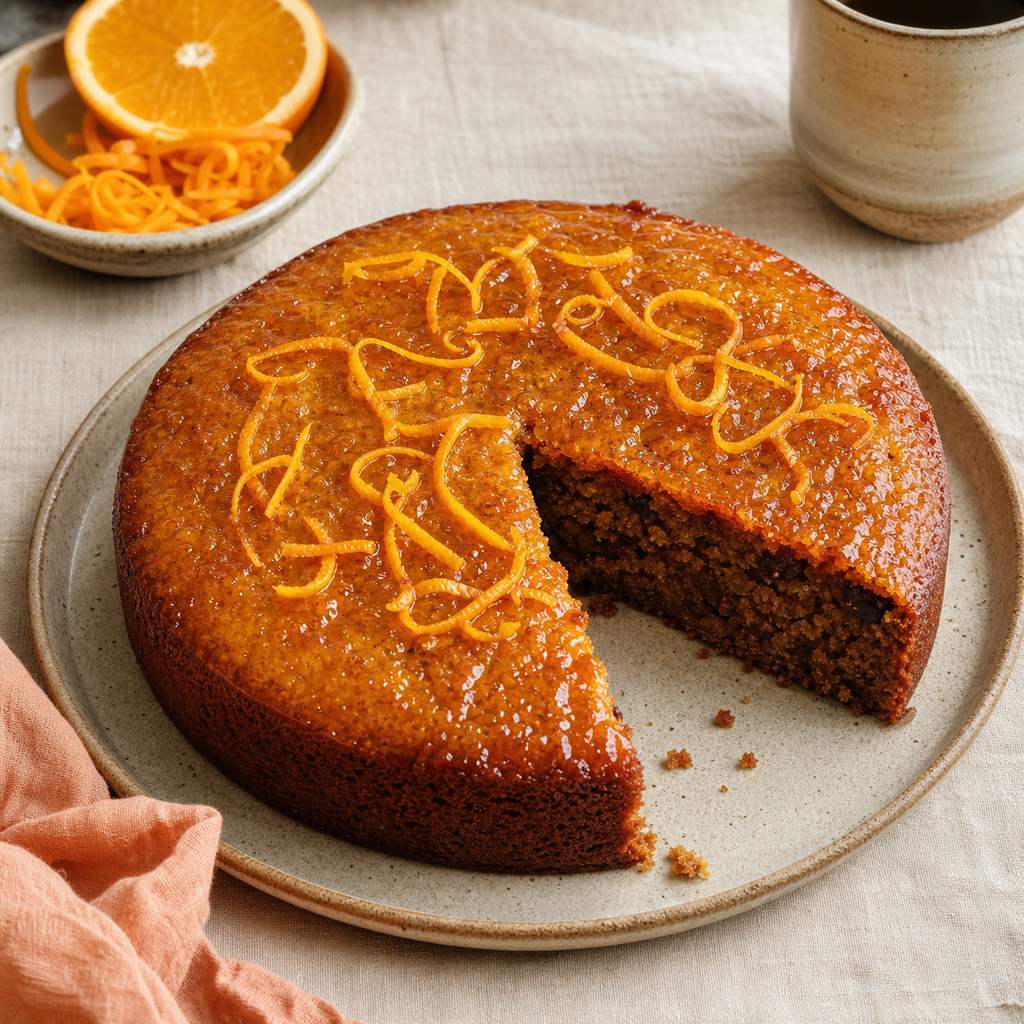
Preparation: 25 min · Cooking: 45 min · Total: 1 hr 55 min · 8 servings
Ingredients
- 200 g pitted dates
- 1 tbsp finely grated orange zest
- 200 g plain wheat flour — For baking; commercially heat-treated ready-to-eat flour is not required. Never taste raw batter.
- medium egg — 1
- 80 g sugar
- 60 g softened unsalted butter
- 1 tsp baking powder
- 200 ml boiling water for dates
- 0.5 tsp baking soda
- butter for greasing the loaf pan (optional) — A little for the pan, separate from the weighed batter butter.
Instructions
Soften Dates
Place 200 g pitted dates in a bowl and pour 200 ml boiling water over them. Let sit for 15 minutes to soften, then mash thoroughly with a fork into a rustic paste. Allow it to cool slightly.
Soften dates in hot water: 900 seconds
Preheat and prepare loaf pans
Preheat the oven to 180°C (350°F) while the dates soften. Grease a loaf pan lightly. At 32 servings use four comparable loaf pans, dividing batter equally; do not pour four batches into one deep pan. Preheat according to the oven, not a fixed timer.
Cream Butter & Sugar
In a large bowl, beat 60 g softened butter and 80 g sugar together until light and fluffy. Whisk in 1 medium egg and 1 tablespoon of fresh orange zest until fully combined. (Safety warning: Raw egg and uncooked flour mixtures may contain pathogens; do not taste or consume the uncooked batter).
Mix dry ingredients
In a separate bowl combine all the measured plain flour, baking powder and baking soda. At the eight-serving loaf yield these are 200 g, 1 teaspoon and half a teaspoon. No yogurt, orange juice, added cardamom or extra salt belongs to this confirmed master.
Fold the batter together
Alternately fold the dry mixture and all the cooled mashed dates with their soaking liquid into the butter mixture. Use a spatula and stop when the flour is incorporated. Do not discard the measured date-soaking water or add it twice. Never taste raw batter.
Fill the prepared loaf pans
Scrape the batter into the prepared loaf pan and level gently, leaving room to rise; do not fill above 2/3. For four loaves divide evenly among four similar pans and bake in batches if the oven cannot accommodate them with airflow. Keep remaining raw batter refrigerated while waiting.
Bake & Verify
Pour into a greased loaf pan. Bake in a preheated oven at 180°C (350°F) for 40 to 45 minutes. Verify doneness by inserting a wooden toothpick into the geometric center of the loaf; it must come out completely clean and dry with no wet batter clinging to it.
Begin checking each loaf: 2400 seconds
Check readiness before proceeding
Check every loaf after about 40–45 minutes: the centre is set with no wet or liquid egg or batter, and a skewer inserted in the centre has no wet batter. Continue baking if needed. A clean toothpick is a baking cue, not proof of pathogen destruction. Keep raw batter separate from ready-to-eat food.
Check every loaf after about 40–45 minutes: the centre is set with no wet or liquid egg or batter, and a skewer inserted in the centre has no wet batter. Continue baking if needed. A clean toothpick is a baking cue, not proof of pathogen destruction. Keep raw batter separate from ready-to-eat food.
Cool & Store
Allow the cake to cool completely on a wire rack before slicing. Store leftovers in an airtight container in the refrigerator at 4°C or below for up to 4 days.
Tips
- Use the same quantities for each loaf and bake larger batches in separate loaf pans.
- Use the selected ingredient quantities. Larger batches may need several pans or pots; cooking reminders do not multiply with servings.
Common mistakes
- Treating a timer as proof of doneness or counting an allocated liquid or fat twice.
Substitutions
- Check product labels for allergens and cross-contact; substitutions may change texture and cooking time.
Storage
Cool the fully baked loaf on a wire rack before slicing. Store in an airtight container at or below 4°C for up to 4 days.
Reheating
Serve chilled or cold from proper refrigerated storage; reheating is not required. Discard improperly stored food.
About this recipe
Date and Orange Cake is presented here as the owner's reviewed Emirati household version; family methods vary.
Editorial approval does not establish independent kitchen testing. Check allergens and follow safe food handling.