Emirati Camel Machboos
Tender bone-in camel with Bezar, loomi and saffron basmati rice; a reconciled four-portion stovetop master.
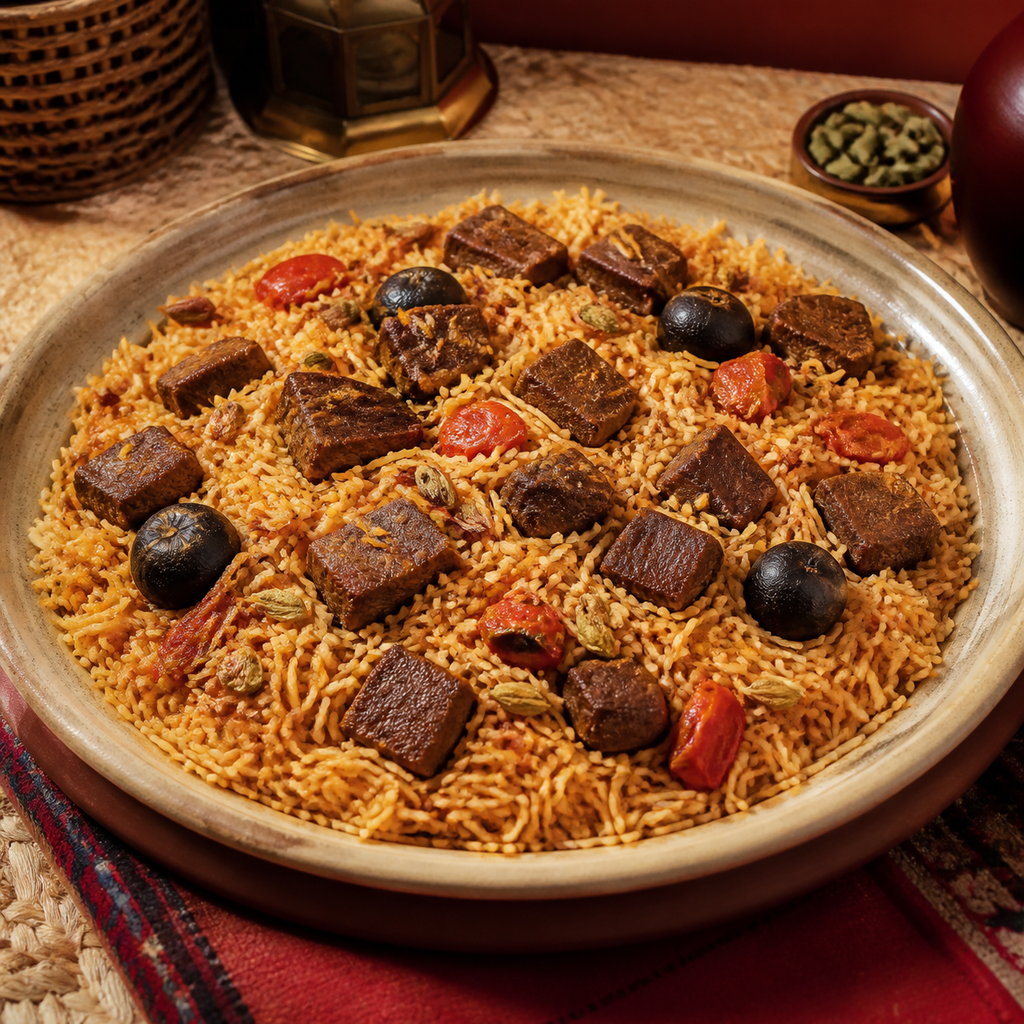
Preparation: 30 min · Cooking: 2 hr 55 min · Total: 3 hr 25 min · 4 servings
Ingredients
- 1000 g bone-in camel meat — Raw bone-in weight; cut into medium chunks. Do not wash. Buy from a reputable source and check halal certification if required.
- 600 g dry basmati rice — Dry weight before rinsing and the 30-minute soak; drain thoroughly.
- dried limes (loomi) — 2 — Pierce each lime before adding.
- tomatoes — 2 — Chop after washing.
- onions — 2 — Finely chop.
- 4 cloves garlic — Mince.
- 1 tbsp fresh minced ginger — Measured after mincing.
- 1 tbsp tomato paste
- 1.5 tbsp Emirati Bezar spice blend — Check the blend's salt, ingredients and allergens; no extra separate cardamom is specified.
- 1 tsp ground turmeric
- 4 tbsp ghee — One total allowance: three quarters for the base and one quarter for finishing.
- 2000 ml initial meat-cooking water — Initial simmering water, not extra rice broth; top up with boiling water only as needed to keep meat covered.
- 1 pinch saffron
- 30 ml warm water for saffron infusion — Part of the total rice-liquid allowance, not extra liquid. Optional rosewater replaces part of this amount.
- salt — To taste; check whether Bezar already contains salt.
- rosewater (optional) — Optional, to taste, within the measured saffron-liquid allowance; do not add extra liquid beyond it.
- fresh coriander or parsley (optional) — Optional garnish; wash and chop.
- 1170 ml reserved strained camel broth — Reserve from the meat pot, not additional purchased stock. Together with the saffron liquid, this makes the measured rice liquid.
- separate rice-soaking water — As needed to rinse and soak rice; discard and do not count toward the meat or rice-cooking liquid.
Instructions
Prepare ingredients and handle raw meat safely
Prepare four standard portions: wash the tomatoes and optional herbs, then chop the tomatoes and onions. Mince the garlic and ginger and pierce the loomi. Keep the raw camel meat refrigerated until needed; do not wash it. Use separate utensils for raw meat and ready-to-eat food, and wash hands and surfaces after handling meat.
Build the aromatic base
Heat three quarters of the measured ghee in a heavy pot over medium heat. Sauté the onions until golden, then add the ginger and garlic and stir briefly until fragrant without scorching. Stir in the tomatoes, tomato paste, Bezar, turmeric, pierced loomi and salt to taste. Cook over medium heat until the tomatoes soften and the spices smell fragrant.
Simmer and check the camel meat
Add the camel meat and turn it over medium heat to coat and lightly sear it in the base. Add the measured initial water and bring to a boil, skimming foam. Cover and reduce to a gentle simmer for about 90–150 minutes, checking from 90 minutes and keeping the meat covered with boiling-water top-ups if necessary. It must be fully tender and a clean probe in the thickest pieces, away from bone, must read at least 75°C for 30 seconds. The 120-minute reminder is a check, not proof of doneness; continue if needed.
Camel meat is fully tender; a clean thermometer in the thickest pieces away from bone reads at least 75°C for 30 seconds.
Check the simmering camel: 7200 seconds
Rinse, soak and drain the rice
During the final part of the meat simmer, rinse the measured dry basmati rice and soak it in separate cold water for 30 minutes. Drain thoroughly and discard that water; it is not part of the cooking-liquid allowance. If the meat is not ready, keep the drained rice covered in the refrigerator at 4°C or below until needed.
Soak the basmati rice: 1800 seconds
Strain broth and measure the saffron liquid
Only when the meat is fully cooked and tender, lift it into a clean dish and keep covered and hot while preparing the rice. Strain the broth and measure the listed reserved-broth quantity from that same pot; if short, top it up with boiling water before measuring. For four portions, use 1170 ml reserved broth and infuse the saffron in 30 ml warm water. If using rosewater, replace some of those 30 ml with it: the infusion must still total 30 ml, giving 1200 ml total rice liquid, not extra broth or infusion.
Boil the rice in the measured liquid
Return the measured broth and saffron liquid to the pot and bring to a rolling boil. Add the soaked, thoroughly drained rice and cook uncovered over high heat. Stir gently only once or twice, then let the liquid fall below the rice surface before covering. The 1200 ml four-portion total already includes the infusion; do not add it a second time.
Steam with meat and finishing ghee
Reduce the heat to the lowest setting and lay the cooked camel meat over the rice. Drizzle with the remaining quarter of the measured ghee; no second full ghee allowance is added. Seal with foil and a heavy lid and steam for about 20–30 minutes until the rice is fully tender and fluffy, with no hard centre. Check from 20 minutes; the 30-minute reminder does not automatically scale with servings. Open the lid and foil away from your face to avoid steam burns.
Rice is fully tender and fluffy with no hard centre; the meat was already thoroughly cooked before steaming.
Check the final steam: 1800 seconds
Serve and chill leftovers promptly
Serve hot in four standard portions, removing the loomi and checking for bone fragments as you portion. Add the optional washed coriander or parsley if desired. Cool any leftovers quickly in shallow portions and refrigerate within 1 hour at 4°C or below; use within 24 hours. Reheat only once to steaming hot throughout, at least 74°C (165°F), and eat immediately; reheating cannot make poorly stored rice safe.
Tips
- Four-portion liquid accounting: 2000 ml initial meat water produces the broth; reserve 1170 ml from that pot plus 30 ml saffron liquid for 1200 ml total rice liquid. Reserved broth is not a second purchased stock ingredient.
- Fourfold batch, 16 standard portions: 4 kg camel, 2.4 kg dry rice, 8 onions, 8 tomatoes, 16 garlic cloves, 4 tbsp ginger, 4 tbsp tomato paste, 6 tbsp Bezar, 4 tsp turmeric and 8 loomi.
- For 16 portions use 16 tbsp ghee total (12 base, 4 finish), 8 L initial meat water and 4800 ml rice liquid: 4680 ml reserved broth plus 120 ml infusion with 4 pinches saffron. Optional rosewater replaces part of those 120 ml.
- Salt, garnish and separate soaking water remain to taste/as needed. Simmer, soak and steam durations do not automatically multiply with servings; larger pieces or batches may take longer.
- Use the confirmed measured liquid, not the earlier 3 cm water-level rule or conflicting large-batch quantities. Rice brands and pots vary; follow package advice and check the grains rather than claiming this is kitchen-tested.
Common mistakes
- Washing raw meat and spreading splashes around the kitchen.
- Buying or adding the listed reserved broth as extra stock on top of the initial meat water.
- Adding saffron water or rosewater beyond the fixed rice-liquid allowance, or using a full second ghee allowance at finishing.
- Assuming tenderness or a timer alone proves meat safety, or leaving cooked rice in a large pot to cool.
Substitutions
- Rosewater and the fresh-herb garnish are optional; omit them without changing the measured rice-liquid total.
- Use the specified camel meat and basmati rice for this master. Different meats, boneless cuts or rice types need separately adjusted timings and liquid; no unverified pressure-cooker conversion is provided.
- Check Bezar and ghee labels, including allergens and any sourcing requirements; salt varies between spice blends.
Storage
Cool quickly in shallow portions and refrigerate within 1 hour at 4°C or below. Use within 24 hours; do not leave rice cooling in the cooking pot. Reheating does not rescue unsafe storage.
Reheating
Reheat only once to steaming hot throughout, at least 74°C (165°F), stirring or turning for even heating. Eat immediately; discard any reheated leftovers.
About this recipe
Camel machboos combines camel meat, Bezar and loomi with spiced basmati rice in the Emirati shared-platter tradition. This owner-approved version uses a fixed measured liquid allowance and a gentle covered finish.
Editorial approval does not establish independent kitchen testing. Check allergens and follow safe food handling.