Acarajé
Bahian black-eyed-pea fritters fried in dendê oil and filled with a simple dried-shrimp relish.
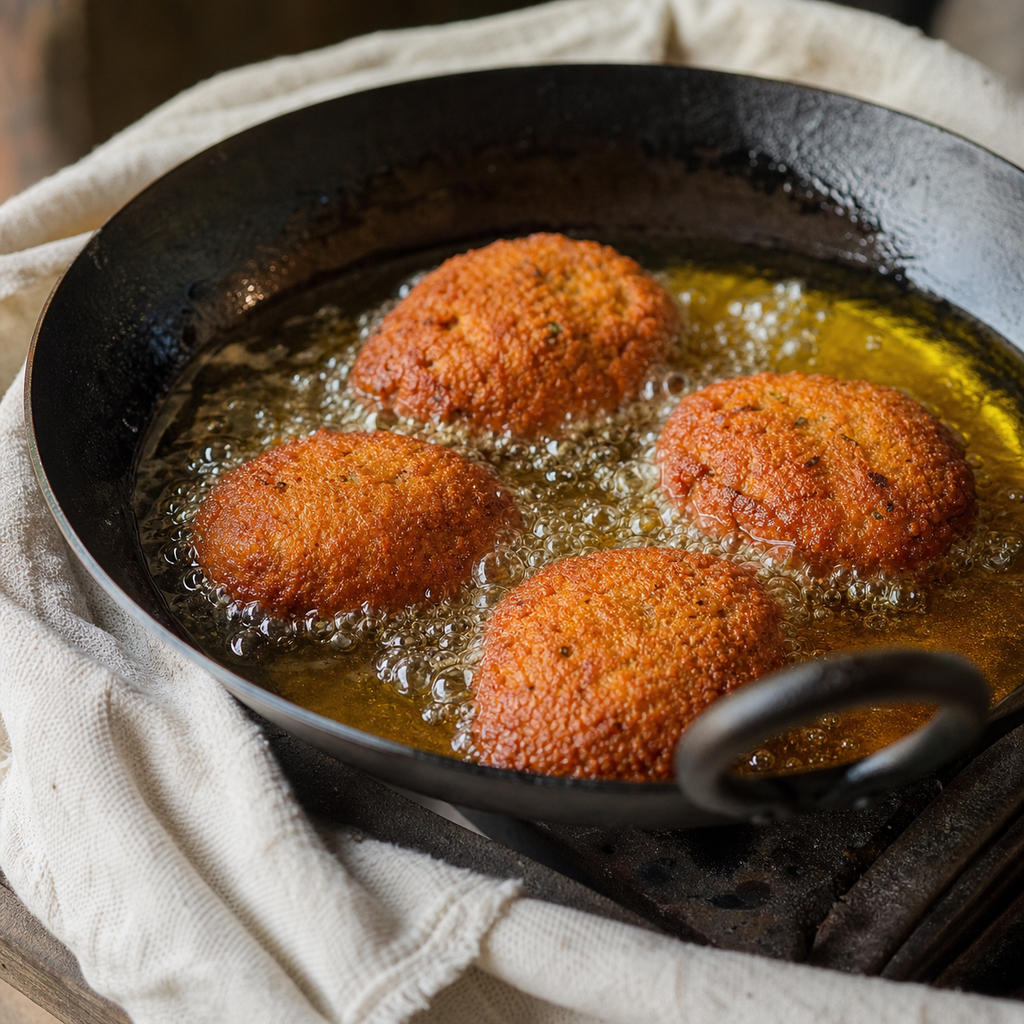
Preparation: 45 min · Cooking: 28 min · Total: 1 hr 30 min · 4 servings
Ingredients
- 400 g black-eyed peas — Soak 8–12 hours before starting; discard the soaking water.
- 200 g onion — 100 g for batter and 100 g for the relish.
- 750 ml red palm oil (dendê) — Use enough for 4–5 cm depth in a narrow, deep pot; do not fill the pot over halfway.
- 40 g cooked dried shrimp — Shellfish allergen; choose a cooked, food-safe product.
- 1 tsp chili flakes — Use less for a milder relish.
- 7 g fine salt
- 2 garlic — Finely grate or mince.
- 200 g ripe tomato — Finely chop.
- 10 g fresh ginger — Peel and finely grate.
- 180 ml water — 60 ml for blending; 120 ml for the relish.
Instructions
Soak and organise the ingredients
Put the 400 g black-eyed peas in a bowl, cover generously with cold water and soak for 8–12 hours. Put the cooked dried shrimp in a separate bowl and check it for shell fragments. Measure the remaining ingredients. This is a simplified home version of a Bahian snack traditionally sold with more elaborate fillings such as vatapá or caruru.
Peel and drain the beans
Drain and discard the bean-soaking water. Rub the beans between your palms in a bowl of fresh water to loosen the skins; pour away floating skins and repeat until most skins are gone. Drain in a sieve for 10 minutes. The beans do not need to be perfectly skinless, but removing most skins makes the fritters lighter.
Blend and aerate the batter
Blend the drained beans with 100 g onion, 4 g salt and 60 ml water until very smooth, stopping to scrape down the sides. Transfer to a bowl and beat vigorously with a wooden spoon for 5 minutes until paler and slightly airy. The thick batter should hold a spoonful mound; add water only 1 teaspoon at a time if the blender cannot move it.
Deep-fry the acarajé
Set a wire rack over a tray. Heat the dendê oil in a deep, heavy pot to 170°C; the pot must be no more than half full. With two spoons, lower 4 heaped tablespoons of batter into the oil, leaving space between them. Fry 5–6 minutes, turning once, until deep golden brown and crisp, then drain on the rack. Fry the remaining batter in the same way. Keep water away from hot oil; if oil smokes, turn off the heat. For an oil fire, turn off the heat and cover with a lid—never use water.
Fry the acarajé batches: 1680 seconds
Cook the dried-shrimp relish
While the fritters drain, heat 2 tablespoons of the dendê oil in a skillet over medium heat. Cook the remaining onion, garlic and ginger for 3 minutes until softened. Add tomato, chili, remaining salt, dried shrimp and 120 ml water. Simmer 5–7 minutes, stirring, until the tomato is saucy and the shrimp are hot throughout. Keep this shellfish filling separate from guests with an allergy.
Check the fritters and filling
Open one fritter: its centre must be set, creamy and hot with no wet or chalky raw bean batter; fry for 1 more minute if needed. The outside should be crisp and deep golden, not burnt. The shrimp relish should be visibly bubbling and reach 63°C if checked with a clean thermometer. Timers indicate when to check, not when to stop automatically.
A cut fritter has a set, creamy, hot centre with no wet or chalky bean batter; the shell is deep golden and crisp.
Fill, serve and store safely
Let the fritters stand 2 minutes so steam can escape, then split each one almost through and spoon in the hot shrimp relish. Serve 2 per person straight away. Refrigerate cooled fritters and relish separately in covered containers within 2 hours and use within 2 days. Reheat fritters on a tray at 200°C until crisp and hot, and reheat the relish to 74°C before filling.
Tips
- Dendê gives acarajé its characteristic colour and aroma; use a neutral oil only if dendê is unavailable, knowing the flavour will change.
Common mistakes
- Frying batter that is too loose makes oily, flat fritters; add water only by teaspoons when blending.
- Overcrowding the pot drops the oil temperature and prevents a crisp crust.
Substitutions
- If cooked dried shrimp is unavailable, serve the fritters plain or use a clearly labelled cooked shellfish alternative; do not serve a shellfish substitute to anyone with an allergy.
Storage
Cool fritters and relish separately, refrigerate within 2 hours in covered containers, and use within 2 days.
Reheating
Reheat fritters on a tray at 200°C until crisp and hot. Reheat the shrimp relish to 74°C before serving.
About this recipe
Acarajé is an Afro-Brazilian street food of Bahia with Yoruba roots. It is traditionally a peeled black-eyed-pea fritter fried in dendê oil and commonly sold with fillings such as vatapá, caruru and dried shrimp.
Editorial approval does not establish independent kitchen testing. Check allergens and follow safe food handling.